

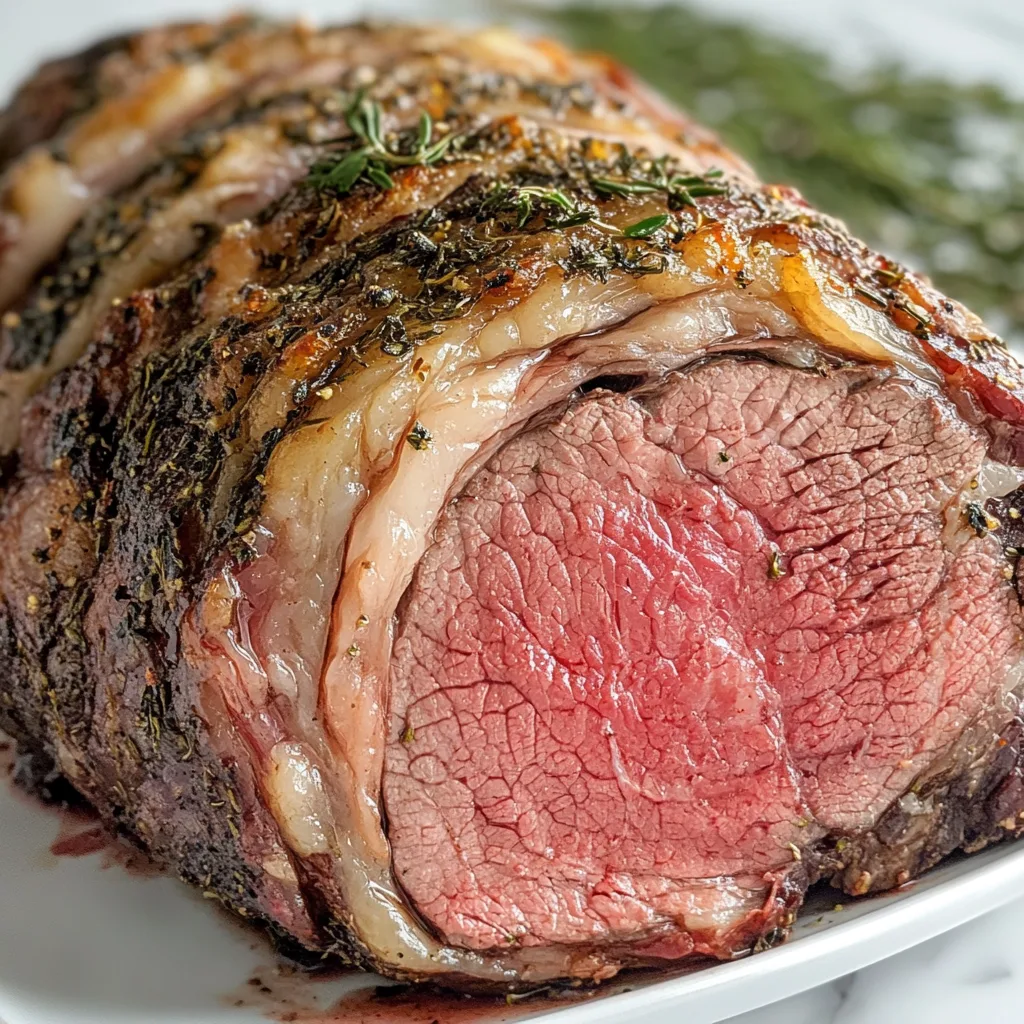
There’s something undeniably magical about a perfectly cooked Easy Slow-Roasted Prime Rib that brings everyone to the table with wide eyes and eager appetites. I discovered this showstopper recipe years ago when hosting my first holiday dinner in my tiny apartment. Despite my kitchen anxiety, this foolproof method delivered a juicy, tender roast that made my guests think I was a culinary genius! The beauty lies in its simplicity – a premium cut of beef, aromatic herbs, and the gentle patience of slow roasting. Trust me, this recipe transforms an ordinary Sunday dinner into a memorable feast without requiring professional chef skills. The mouthwatering aroma that fills your home is just a bonus!
Table of Contents
Recipe
Print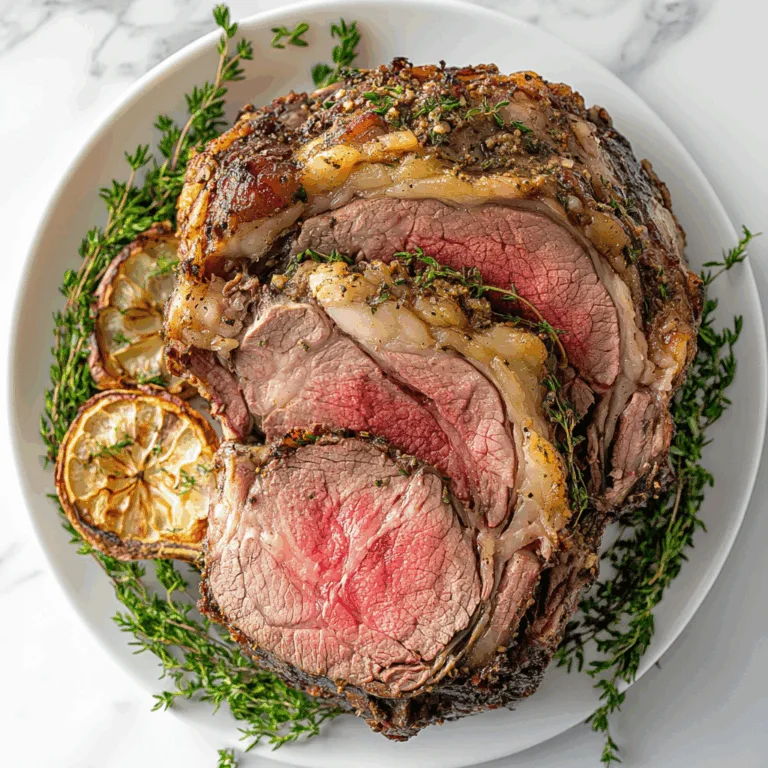
Easy Slow-Roasted Prime Rib Recipe | Perfectly Tender & Juicy Every Time
This easy slow-roasted prime rib is your go-to holiday centerpiece—rich, tender, and deeply flavorful with just simple seasoning and a low oven temperature.
- Total Time: 4 hours 15 minutes
- Yield: 6 servings
Ingredients
1 (5–6 lb) bone-in prime rib roast
2 tbsp kosher salt
1 tbsp black pepper
1 tbsp garlic powder
1 tbsp onion powder
1 tbsp fresh rosemary, chopped
1 tbsp olive oil
Instructions
1. Remove roast from the fridge 2–3 hours before cooking to come to room temperature.
2. Preheat oven to 200°F (93°C).
3. In a small bowl, mix salt, pepper, garlic powder, onion powder, rosemary, and olive oil to form a paste.
4. Rub seasoning mix all over the roast.
5. Place the roast bone-side down on a rack in a roasting pan.
6. Roast at 200°F for 3–4 hours, or until internal temperature reaches 125°F for medium-rare.
7. Remove from oven and tent with foil. Let rest 30–40 minutes.
8. Increase oven to 500°F (260°C). Return roast to oven for 10 minutes to crisp crust.
9. Slice and serve immediately.
Notes
Use a meat thermometer for accuracy—this method works best when not guessing.
Letting it rest before the high-heat finish ensures juices stay in.
This technique delivers even doneness from edge to center.
- Prep Time: 15 minutes
- Cook Time: 4 hours
- Category: Dinner
- Method: Slow Roasting
- Cuisine: American
Why You’ll Love This Easy Slow-Roasted Prime Rib
Perfect for Special Occasions
There’s something inherently celebratory about serving a prime rib roast. I remember the first time I made this for my family’s Christmas gathering – the collective gasp when I brought it to the table made all the effort worthwhile! The beauty of this slow-roasting method is how it creates a consistent medium-rare interior with a delectable crust. The low temperature cooking (around 225°F) means you get a perfect edge-to-edge doneness without the dreaded gray band of overcooked meat. Plus, the dramatic presentation of carving those rosy slices at the table creates an instant “wow” moment that elevates any special occasion.
Surprisingly Simple Technique
Don’t let the impressive results fool you – this method is remarkably forgiving for home cooks. The secret lies in the slow, gentle heat that gives you a generous window of perfect doneness. I once got distracted by an impromptu neighborhood visit and left my roast in 30 minutes longer than planned. I panicked, but the meat was still gloriously juicy! The reverse-sear technique – slow-roasting first, then finishing with high heat – creates that stunning crust while keeping the interior perfectly cooked. A good meat thermometer is your best friend here, taking all the guesswork out of timing. Even kitchen novices can achieve restaurant-worthy results.
Essential Tips & Tricks
Choosing and Preparing Your Roast
Selecting the right cut makes all the difference in your slow-roasted prime rib. Look for a well-marbled piece with the bones still attached (or ask your butcher to tie them back on after removing). The marbling melts during cooking, creating those incredible pockets of flavor and juiciness we all crave. I always let my roast sit at room temperature for 2-3 hours before cooking – this crucial step ensures even cooking. Season generously with kosher salt the night before and refrigerate uncovered to dry the surface slightly. This overnight dry-brining technique creates a beautifully seasoned roast with enhanced flavor throughout.
Temperature Control Is Everything
The difference between a good prime rib and an exceptional one comes down to temperature precision. I learned this lesson the hard way after rushing a roast for unexpected guests! Invest in a reliable probe thermometer that can stay in the meat while cooking. For a perfect medium-rare, remove the roast when the internal temperature reaches 120-125°F – it will continue cooking during the resting period. The final temperature should reach about 130-135°F. Allow at least 30 minutes of resting time under loose foil. This patience allows the juices to redistribute throughout the meat instead of spilling out when you slice, resulting in that melt-in-your-mouth texture we’re aiming for.
Serving Ideas & Creative Variations
Classic Accompaniments
Nothing complements a slow-roasted prime rib quite like traditional sides that balance its rich flavor. I serve mine with a zesty horseradish cream sauce that cuts through the meat’s richness – just mix prepared horseradish with sour cream, a touch of Dijon, and lemon juice. For sides, crispy roasted potatoes absorb the flavorful meat juices beautifully. My family fights over my Yorkshire puddings – those airy, golden puffs that I bake in the beef drippings. A simple green vegetable like roasted asparagus or Brussels sprouts adds color and freshness. These classic pairings create a harmonious meal where each element complements the star attraction.
Modern Twists
While traditional preparations are timeless, experimenting with different flavor profiles can create memorable variations. Try a coffee and peppercorn crust for a bold, aromatic finish – the coffee enhances the meat’s natural flavors without tasting like your morning brew. For herb lovers, a paste of fresh rosemary, thyme, garlic, and olive oil creates a fragrant crust. I once incorporated Mediterranean flavors with lemon zest, oregano, and olives for a summer dinner party that guests still talk about. For sauce alternatives, consider a red wine reduction or chimichurri for bright, herbaceous notes that complement the beef’s richness while offering something unexpected.
Storage & Troubleshooting Guide
Storing Leftovers Properly
Leftover prime rib is a luxury worth protecting! Store cooled meat in airtight containers in the refrigerator for up to 4 days. I separate my leftovers into meal-sized portions for easier reheating. To maintain that perfect texture, slice only what you’ll use immediately and keep the remaining roast whole. For longer storage, wrap individual portions tightly in plastic wrap, then foil, and freeze for up to 2 months. The fat content helps prevent freezer burn and preserves flavor. When reheating, avoid the microwave which can toughen the meat. Instead, warm slices gently in beef broth or wrap in foil and heat in a 250°F oven until just warmed through.
Fixing Common Issues
Even experienced cooks occasionally encounter challenges with prime rib. If your roast develops an uneven crust, try positioning it away from oven walls where heat concentrates. For a roast that’s undercooked in the center but perfect on the outside, slice the cooked portions and return the center to the oven. Conversely, if you’ve overshot your target temperature, don’t panic! Slice the meat thinner to mitigate any toughness. If your au jus turns out too greasy, refrigerate it briefly so the fat solidifies on top and can be easily removed. Remember that carryover cooking is significant with large roasts – always err on the side of removing it earlier rather than later.
Frequently Asked Questions
How long does it take to slow-roast a prime rib?
Plan for about 35 minutes per pound at 225°F for medium-rare. A 5-pound roast needs approximately 3 hours, plus 30 minutes resting time. Always use a thermometer rather than relying solely on timing.
Should I cover my prime rib while roasting?
No, roast it uncovered to develop a beautiful crust. The slow cooking method prevents it from drying out, even without covering.
Can I cook my Easy Slow-Roasted Prime Rib to well-done?
While possible, cooking beyond medium (145°F) sacrifices tenderness and juiciness. Consider a different cut like sirloin if well-done beef is preferred.
What’s the difference between prime rib and ribeye?
Prime rib is a larger cut that includes the ribeye muscle and bone. Ribeye is the boneless center portion. Both come from the same section but are prepared differently.
How much prime rib should I buy per person?
Calculate about ¾ pound per adult for bone-in prime rib, or ½ pound for boneless. Increase slightly for hearty eaters or if you want leftovers.
Final Thoughts
Mastering this Easy Slow-Roasted Prime Rib has transformed my approach to special occasion cooking. There’s something deeply satisfying about presenting a perfectly cooked roast that required minimal active preparation but delivers maximum flavor impact. What I love most is how this method allows me to enjoy my guests rather than frantically tending to last-minute cooking. The slow-roasting technique creates a forgiving timeline that accommodates real life and real gatherings. Whether for a holiday feast or simply because you deserve something extraordinary, this prime rib recipe promises to deliver memorable meals and the confidence to tackle even the most impressive cuts of meat.