

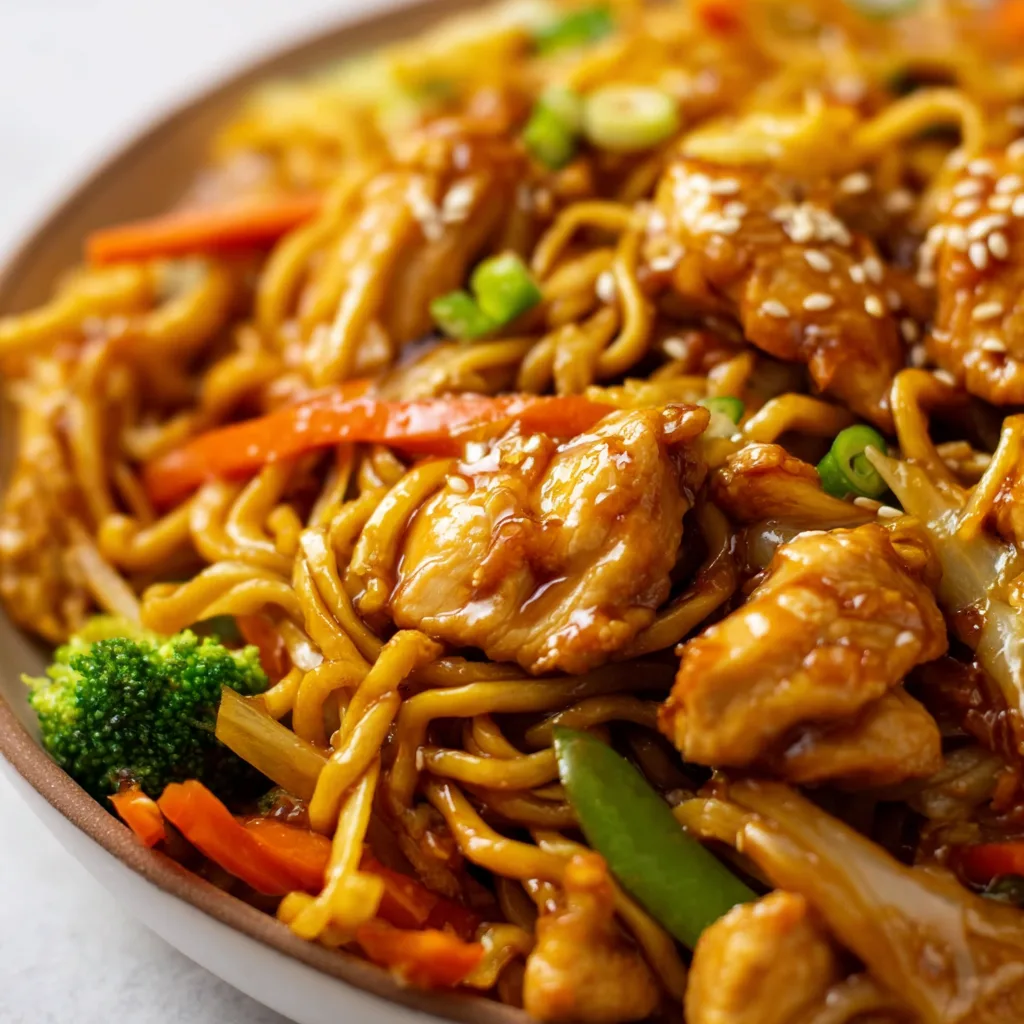
Chicken lo mein has always been my comfort food salvation on those nights when takeout temptation hits hard. There’s something magical about those slippery noodles tangled with crisp vegetables and tender chicken, all bathed in that perfect umami sauce. I discovered this homemade version during a particularly rainy weekend when my delivery app crashed, and honestly? It’s become my go-to whenever I crave those familiar flavors but want something fresher and more customizable. The best part is how quickly it comes together—faster than delivery and infinitely more satisfying when you take that first twirl of noodles around your fork.
Recipe
Print
Delicious Chicken Lo Mein Recipe | Easy Homemade Asian Noodles
Ingredients
Why You’ll Love This Chicken Lo Mein
Quick and Customizable
This chicken lo mein recipe has saved me from the “what’s for dinner” panic more times than I can count. The entire dish comes together in under 30 minutes, making it perfect for those nights when you’re exhausted but still want something satisfying. I love that I can swap vegetables based on what’s looking sad in my crisper drawer—bell peppers about to wrinkle? Toss them in! Lonely carrot? Perfect addition! The flexibility extends to proteins too. While chicken is my go-to, I’ve made this with leftover steak, shrimp, or just loaded up on extra veggies for meatless Monday. The sauce clings to everything beautifully, creating that authentic takeout experience without the wait.
Budget-Friendly Alternative
Let’s talk about the money-saving magic of this recipe. One takeout order of chicken lo mein typically costs me around $15 now, but making this at home cuts that cost by more than half. I use simple pantry staples like soy sauce, sesame oil, and brown sugar for the sauce—ingredients that last through multiple meals. The noodles themselves are inexpensive, especially if you grab them from an Asian market (though regular spaghetti works in a pinch!). I often stretch the protein by using just one chicken breast for the entire dish, focusing instead on loading up with vegetables.
This approach not only saves money but also creates a more nutritious meal that leaves everyone satisfied without that heavy takeout feeling.
Essential Tips & Tricks
Noodle Know-How
The secret to perfect lo mein starts with how you handle your noodles. I learned through many soggy attempts that slightly undercooking the noodles is crucial—they’ll continue cooking when tossed with the hot vegetables and sauce. Aim for about 1 minute less than the package directions suggest. After draining, I immediately rinse them under cold water to stop the cooking process and rinse away excess starch. This prevents them from sticking together in a gummy mass. For authentic flavor, look for Chinese egg noodles, though spaghetti or linguine works in a pinch.
The final trick? Toss the cold noodles with a few drops of sesame oil while they wait to join the party—this adds flavor and further prevents sticking.
Mastering the Sauce
The sauce is where this chicken lo mein truly shines, and balancing those flavors is easier than you might think. I always start by mixing the sauce separately before adding it to the wok—this ensures even distribution without having to overcook anything. My basic ratio is 3 tablespoons soy sauce, 1 tablespoon oyster sauce, 1 teaspoon sesame oil, 1 tablespoon brown sugar, and a splash of rice vinegar. For depth, add minced garlic and ginger to your cooking oil before the vegetables go in, rather than directly to the sauce.
This infuses the entire dish with their aromatics. If you enjoy a bit of heat, like my family does, a teaspoon of chili garlic sauce adds the perfect kick without overwhelming the other flavors.
Serving Ideas & Creative Variations
Perfect Pairings
Chicken lo mein works beautifully as both a main dish and a supporting player. When serving it as the star, I like to pair it with simple sides that complement without competing. A small bowl of hot and sour soup makes an excellent starter, while steamed edamame provides a protein-rich nibble beforehand. For a complete takeout-at-home experience, add some homemade crab rangoons or spring rolls on the side. When I’m feeding a crowd, I’ll often set up a DIY lo mein bar with the noodles and various toppings so everyone can customize their bowl. This works especially well for picky eaters or when entertaining guests with different dietary preferences—everyone gets exactly what they want!
Exciting Flavor Twists
Don’t be afraid to play with flavor profiles once you’ve mastered the basic chicken lo mein! My family’s favorite variation adds a Thai-inspired twist with a tablespoon of peanut butter melted into the sauce, a squeeze of lime, and a handful of chopped cilantro and crushed peanuts on top. For a Korean-inspired version, substitute gochujang for some of the soy sauce and top with kimchi. When I’m craving something lighter, I’ll make a lemon-forward variation with chicken, adding lemon zest and juice to the sauce and lots of fresh herbs at the end. The noodles also make an excellent base for leftovers—I’ve tossed in everything from rotisserie chicken to holiday ham with delicious results.
Storage & Troubleshooting Guide
Proper Storage Solutions
Chicken lo mein makes excellent leftovers when stored properly. I transfer any remaining noodles to an airtight container once they’ve cooled completely—usually within an hour of cooking. In the refrigerator, they’ll maintain their quality for 3-4 days, though the noodles will absorb more sauce over time. To revive leftovers, I add a splash of water or chicken broth when reheating, which creates steam and prevents dryness. For meal prep purposes, I sometimes keep the components separate—storing cooked chicken, prepared vegetables, and noodles in different containers, then combining and adding fresh sauce when ready to eat. This method prevents the noodles from becoming overly soft and gives you that just-cooked texture.
Common Problems Solved
Even experienced cooks encounter challenges with lo mein. If your noodles clump together despite your best efforts, don’t panic! A quick solution is to rinse them again under warm water and gently separate with tongs before adding to your stir-fry. For sauce that’s too thin and watery (a common issue), mix 1 teaspoon of cornstarch with 1 tablespoon of cold water and stir it into your cooking lo mein—it will thicken within minutes. If you accidentally oversalted your dish, add a squeeze of lemon or lime juice to balance the flavors, or toss in more quickly stir-fried vegetables to dilute the salt concentration.
Remember that stir-frying works best at high heat, so if your vegetables seem soggy, your pan likely isn’t hot enough.
Frequently Asked Questions
Can I make chicken lo mein ahead of time?
Yes! Prepare components separately and refrigerate for up to 2 days. Cook noodles al dente, toss with a bit of oil to prevent sticking, and store separately from vegetables and sauce. Combine and reheat quickly in a hot wok when ready to serve.
What’s the difference between lo mein and chow mein?
Lo mein noodles are tossed with sauce after cooking, while chow mein noodles are fried until crispy. Chicken lo mein has a softer, more sauce-coated texture, while chow mein offers contrasting crispy and soft textures.
Can I use different proteins in this recipe?
Absolutely! Beef, shrimp, pork, or tofu all work wonderfully. Adjust cooking times accordingly—shrimp needs just 2-3 minutes, while beef might require slightly longer than chicken.
Are rice noodles suitable for lo mein?
Rice noodles have a different texture and absorb sauce differently. While not traditional for lo mein, they can work if you prefer them—just reduce cooking time and handle gently to prevent breaking.
How do I prevent my vegetables from becoming mushy?
Stir-fry vegetables in order of density—carrots and broccoli first, followed by bell peppers, then leafy greens last. Use high heat and keep everything moving constantly for crisp-tender results.
Final Thoughts
This chicken lo mein recipe has become my reliable kitchen companion—the dish I turn to when I want something comforting yet impressive without hours of effort. What I love most is watching friends’ faces light up when they realize homemade can actually taste better than takeout. The beauty lies in its adaptability; it evolves with your pantry contents and cravings while maintaining that satisfying tangle of noodles and savory sauce. I hope this becomes your go-to recipe too! For more quick dinner inspiration, check out my collection on Pinterest where I’m always adding new weeknight wonders.