

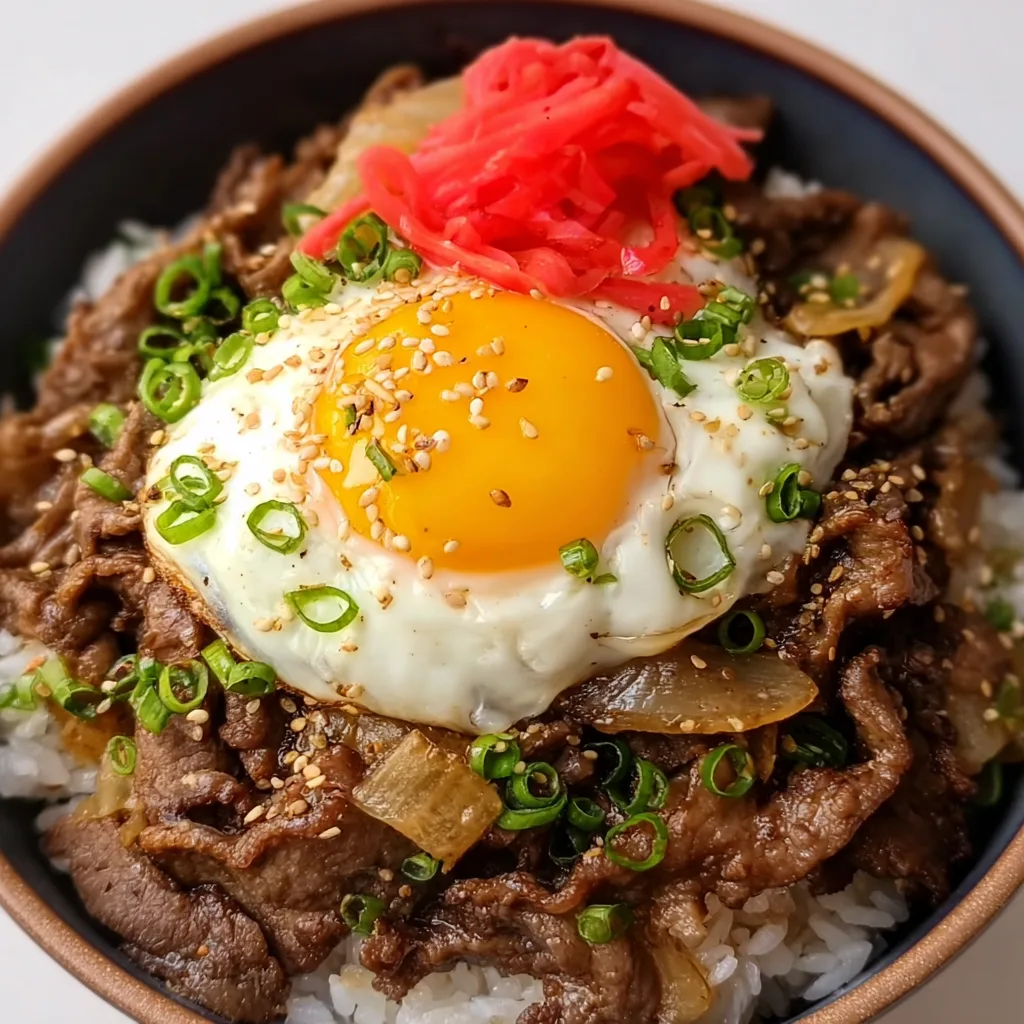
Gyudon, that soul-warming Japanese beef rice bowl, has been my weeknight savior more times than I can count. There’s something almost magical about the way those paper-thin slices of beef simmer in that sweet-savory sauce until they’re melt-in-your-mouth tender. When life gets chaotic and dinner feels impossible, I find myself reaching for this one-pan wonder that delivers comfort in less than 30 minutes. Like my other quick dinner recipes, gyudon strikes that perfect balance between minimal effort and maximum satisfaction.
Recipe
Print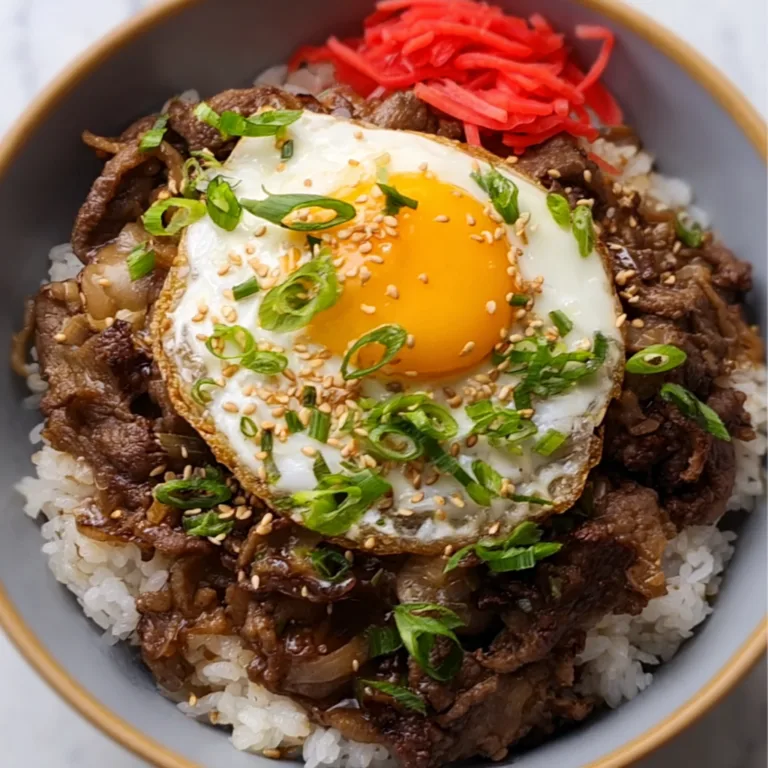
Delicious Gyudon Recipe
This Delicious Gyudon Recipe features tender thinly sliced beef simmered in a savory-sweet soy sauce broth with onions, then served over fluffy steamed rice. This authentic Japanese beef rice bowl is quick, comforting, and perfect for an easy homemade dinner.
- Total Time: 25 minutes
- Yield: 4 servings
Ingredients
1 pound thinly sliced beef (ribeye or sirloin)
1 large onion, thinly sliced
2 cups cooked Japanese short-grain rice
1 cup dashi stock (or beef broth as substitute)
3 tablespoons soy sauce
2 tablespoons mirin
1 tablespoon sake (optional)
1 tablespoon sugar
1 teaspoon grated fresh ginger
2 green onions, sliced (for garnish)
2 soft-boiled eggs (optional topping)
Pickled red ginger (optional garnish)
Instructions
1. In a large skillet, combine dashi stock, soy sauce, mirin, sake, sugar, and grated ginger.
2. Bring mixture to a gentle simmer over medium heat.
3. Add sliced onions and cook for 3–4 minutes until slightly softened.
4. Add thinly sliced beef in a single layer.
5. Simmer for 4–5 minutes until beef is cooked through and tender.
6. Skim off any foam if needed and adjust seasoning to taste.
7. Divide hot cooked rice into serving bowls.
8. Spoon beef and onion mixture evenly over the rice.
9. Top with sliced green onions, soft-boiled egg, and pickled ginger if desired.
10. Serve immediately while hot.
Notes
Freeze beef slightly before slicing for ultra-thin cuts.
Do not overcook the beef to keep it tender.
Traditional gyudon uses Japanese short-grain rice for authentic texture.
Add a sprinkle of shichimi togarashi for gentle heat.
- Prep Time: 10 minutes
- Cook Time: 15 minutes
- Category: Dinner
- Method: Simmered
- Cuisine: Japanese
Why You’ll Love This Gyudon (Japanese Beef Rice Bowl)
A Perfect Weeknight Solution
There’s nothing quite like walking through your door after a long day and having dinner ready in just 20 minutes. What I adore about gyudon is how it transforms budget-friendly ingredients into something that feels special. Thinly sliced beef (often on sale!) simmers quickly in a mixture of soy sauce, mirin, and onions until it’s tender and infused with that umami-rich sauce. The beef-to-rice ratio is perfect too—enough protein to satisfy but stretched with rice to keep costs down. I’ve made this on my busiest nights and still had time to relax afterward!
Authentic Flavors Made Simple
Don’t let the exotic name fool you—gyudon requires ingredients you can find at most grocery stores. The signature flavor comes from the perfect balance of sweet mirin, savory soy sauce, and a hint of ginger that creates that authentic Japanese taste without any complicated techniques. What I love most is how the sauce seeps into the rice below, flavoring every single bite. My first taste of gyudon in a tiny Tokyo restaurant years ago seemed impossible to recreate, but this recipe captures that same comfort in your own kitchen with ingredients you likely already have.
Essential Tips & Tricks
Mastering the Perfect Beef
The secret to restaurant-quality gyudon is in how you slice the beef. For that melt-in-your-mouth texture, you want it paper-thin. Ask your butcher to slice beef ribeye or chuck thinly for sukiyaki, or partially freeze your meat for 20-30 minutes before slicing it yourself with your sharpest knife. The thin slices cook in minutes and absorb more flavor from the sauce. I’ve found that cutting against the grain makes each bite tender rather than chewy—a game-changing difference when you’re looking for that authentic soft texture like in my garlic butter steak recipe.
Perfecting the Signature Sauce
The sauce is the heart of gyudon, and balancing those flavors is easier than you might think. The key ratio I swear by is 3 parts soy sauce, 2 parts mirin, 1 part sake (or water with a pinch of sugar), and a touch of dashi for depth of flavor. Let your onions cook until translucent before adding the sauce ingredients—they’ll absorb all that savory goodness and become almost jammy. Don’t rush this step! Those caramelized onions create a sweet base that balances the salty soy perfectly. For extra richness, I sometimes add a beaten egg to the hot beef right before serving.
Serving Ideas & Creative Variations
Traditional Garnishes That Elevate
A proper gyudon isn’t complete without its traditional garnishes that add both visual appeal and flavor contrast. I always keep a jar of beni shoga (red pickled ginger) in my fridge—its tangy brightness cuts through the rich beef perfectly. A sprinkle of green onions adds fresh crunch, while a raw egg yolk (if you’re feeling adventurous) creates an instant silky sauce when mixed in. For texture contrast, try adding toasted sesame seeds or thin strips of nori. These simple additions transform your bowl from homemade to restaurant-worthy with minimal effort, much like how simple garnishes elevate my creamy lemon garlic scallops.
Modern Twists on the Classic
While I respect tradition, I also love playing with this versatile dish. For a spicy kick, try adding a drizzle of chili oil or a spoonful of kimchi on top. Vegetarians can swap the beef for meaty mushrooms like portobello or king oyster—they absorb the sauce beautifully. For extra vegetables, I sometimes add steamed broccoli or spinach beneath the beef. My family’s favorite variation includes a soft-boiled egg and sliced avocado for creaminess. You can even transform leftovers into onigiri filling or use the seasoned beef in fusion tacos the next day!
Storage & Troubleshooting Guide
Making Ahead and Storing
Gyudon is perfect for meal prep because it actually tastes better the next day as the flavors meld together. Store the beef and sauce mixture separately from rice in airtight containers in the refrigerator for up to 3 days. The rice tends to dry out faster, so I recommend making fresh rice when reheating or adding a splash of water before microwaving stored rice. For freezing, portion the beef mixture (without rice) in freezer-safe containers for up to 2 months. Let it thaw overnight in the refrigerator before gently reheating on the stovetop with a splash of water to revive the sauce.
Fixing Common Mistakes
Even experienced cooks sometimes encounter issues with gyudon. If your sauce is too salty, balance it with a teaspoon of sugar or mirin. Too sweet? Add a few drops of rice vinegar. If your beef turned out tough, it was likely cooked too long or sliced too thick—next time, watch it carefully and remove from heat while still slightly pink (it will continue cooking in the hot sauce). Watery sauce can be fixed by simmering uncovered for a few minutes to reduce. Remember that authentic gyudon sauce is meant to be fairly thin—it’s designed to soak into the rice below!
Frequently Asked Questions
What cuts of beef work best for gyudon?
Ribeye, chuck, or thinly sliced sirloin are ideal. The key is paper-thin slicing and some marbling for tenderness. Pre-sliced “sukiyaki beef” from Asian markets saves time and gives authentic results.
Can I make gyudon without sake or mirin?
Absolutely! Substitute sake with chicken broth plus 1/2 teaspoon sugar. Replace mirin with 1 tablespoon rice vinegar and 2 teaspoons sugar for each tablespoon of mirin.
How do I get my beef sliced thin enough for proper gyudon?
Partially freeze beef for 20-30 minutes until firm but not solid. Use your sharpest knife to cut very thin slices against the grain, or ask your butcher to slice it for sukiyaki.
Is gyudon healthy?
Traditional gyudon is moderately healthy with protein and vegetables. For a lighter version, use leaner beef, reduce sugar, increase vegetables, and serve with brown rice instead of white.
Can I use a slow cooker to make authentic Japanese gyudon?
While traditional gyudon is quick-cooked, a slow cooker works for a different but delicious result. Cook on low for 3-4 hours, using slightly thicker beef slices to prevent overcooking.
Final Thoughts
Gyudon has earned its place as one of my most treasured weeknight recipes because it delivers that rare combination of speed, comfort, and authentic flavor. There’s something deeply satisfying about watching family members’ faces light up when they smell that sweet-savory aroma filling the kitchen. Whether you stick to the traditional preparation or experiment with modern twists, this Japanese beef rice bowl proves that delicious meals don’t require complicated techniques or hours in the kitchen. I hope your gyudon brings as much comfort to your table as it has to mine! For more cozy meal inspiration, check out my recipes on Pinterest.