

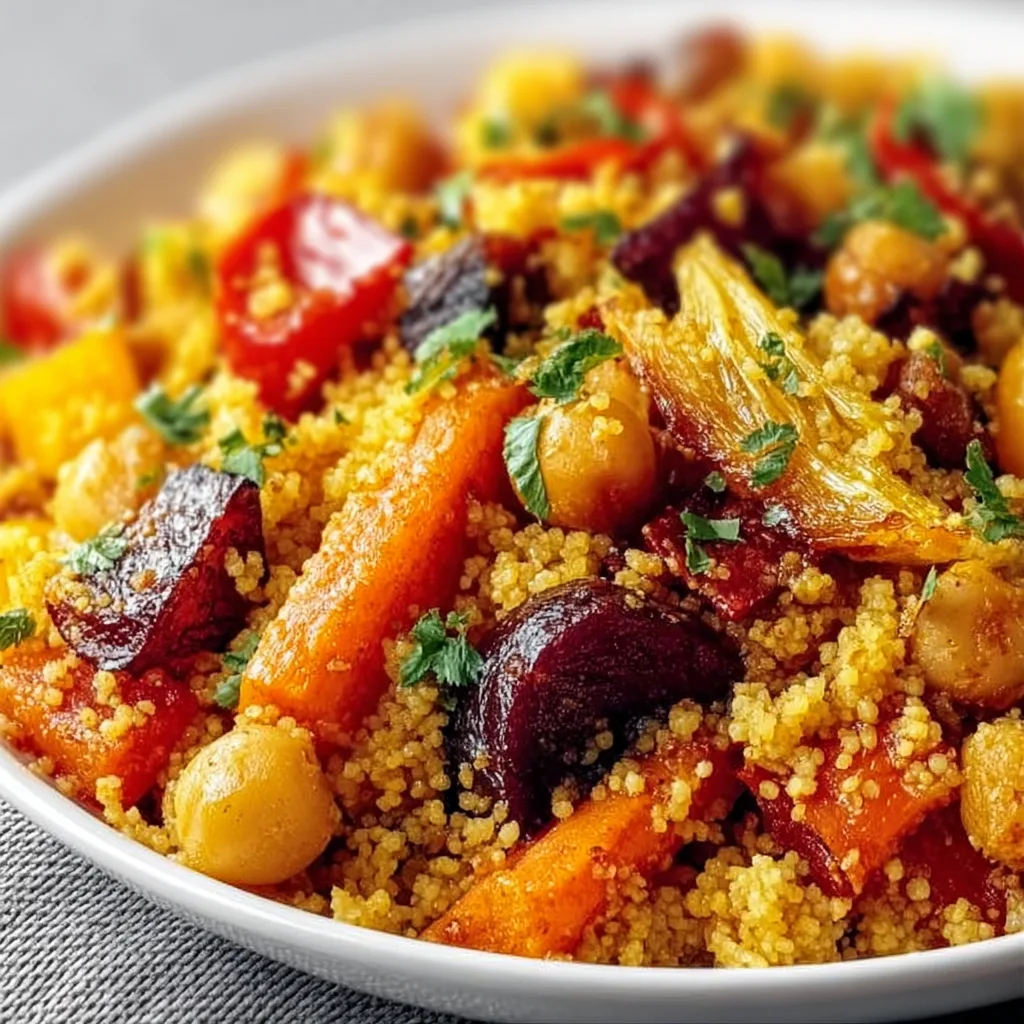
Moroccan Couscous with Roast Vegetables brings the exotic flavors of North Africa right to your dinner table with minimal effort. The first time I made this colorful dish, my kitchen filled with the warm aroma of cumin, cinnamon, and roasting vegetables—instantly transporting me to the bustling markets of Marrakech. There’s something magical about how the fluffy couscous soaks up the spiced olive oil and vegetable juices, creating a dish that’s both comforting and exciting. If you’re looking for a meal that’s both nourishing and adventurous, this one-pan wonder is exactly what your weeknight dinner rotation needs.
Recipe
Print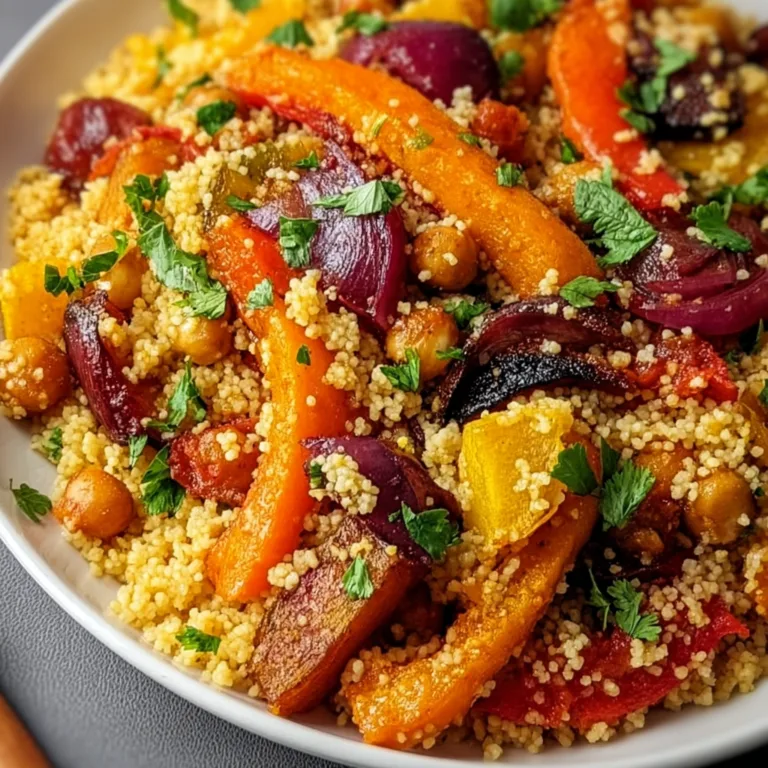
Delicious Moroccan Couscous with Roast Vegetables Recipe | Healthy & Flavorful
This Moroccan Couscous with Roast Vegetables is a vibrant, healthy, and flavorful dish packed with warm spices and colorful roasted vegetables. Light fluffy couscous pairs perfectly with roasted carrots, zucchini, and bell peppers for a nutritious Mediterranean-inspired meal.
- Total Time: 35 minutes
- Yield: 4 servings
Ingredients
1 cup couscous
1 cup vegetable broth
1 zucchini, sliced
1 red bell pepper, chopped
1 carrot, sliced
1 small red onion, sliced
2 tablespoons olive oil
1 teaspoon paprika
1/2 teaspoon cumin
1/2 teaspoon turmeric
1/2 teaspoon salt
1/4 teaspoon black pepper
2 tablespoons chopped fresh parsley
1 tablespoon lemon juice
Instructions
1. Preheat oven to 400°F (200°C).
2. Place zucchini, bell pepper, carrot and onion on a baking sheet.
3. Drizzle vegetables with olive oil.
4. Season with paprika, cumin, turmeric, salt and black pepper.
5. Toss the vegetables until evenly coated.
6. Roast for about 20–25 minutes until tender and slightly caramelized.
7. Meanwhile bring vegetable broth to a boil in a saucepan.
8. Remove from heat and stir in couscous.
9. Cover and let sit for about 5 minutes until the couscous absorbs the liquid.
10. Fluff couscous with a fork.
11. Add roasted vegetables to the couscous.
12. Drizzle lemon juice and sprinkle chopped parsley.
13. Toss gently to combine and serve warm.
Notes
Add chickpeas for extra protein.
Raisins or dried apricots add a traditional Moroccan sweetness.
Serve with grilled chicken or lamb for a complete meal.
Leftovers keep well in the refrigerator for up to 3 days.
- Prep Time: 10 minutes
- Cook Time: 25 minutes
- Category: Dinner
- Method: Roasting
- Cuisine: Moroccan
- Diet: Vegetarian
Why You’ll Love This Moroccan Couscous with Roast Vegetables
A Flavor Explosion in Every Bite
The beauty of Moroccan Couscous with Roast Vegetables lies in its complex flavor profile that develops as the vegetables caramelize in the oven. Sweet bell peppers, earthy zucchini, and tender eggplant take on a beautiful char while absorbing the aromatic spice blend. I adore how the cinnamon adds unexpected warmth while cumin provides that distinctive North African depth. The natural sweetness from roasted carrots and red onions creates a perfect balance against the slight tanginess from lemon juice. Each forkful delivers a different combination of textures and tastes—crisp vegetables against pillowy couscous, sweet against savory, warm spices against bright herbs. It’s a sensory adventure that makes dinner feel special, even on a regular Tuesday.
Nutritional Powerhouse That Satisfies
This dish isn’t just a feast for your taste buds—it’s a nutritional goldmine. Packed with colorful vegetables, each serving delivers a rainbow of antioxidants, vitamins, and minerals. The whole wheat couscous provides satisfying complex carbohydrates and fiber that keep you feeling full longer. What I particularly love is how adaptable this dish is for various dietary needs. Need protein? Toss in chickpeas or serve with grilled chicken. Watching calories? The roasted vegetables create such incredible flavor that you need very little oil. Vegetarian or vegan? It’s naturally plant-based and completely satisfying. I’ve served this to friends with various dietary preferences, and everyone leaves the table happy and nourished, asking for the recipe.
Essential Tips & Tricks
Perfect Roasting Technique
The key to exceptional Moroccan Couscous lies in how you roast those vegetables. I’ve learned through many trials that uniform cutting is crucial—aim for pieces about 1-inch square so everything cooks evenly. Don’t overcrowd your baking sheet! When vegetables are packed too tightly, they steam rather than roast, robbing you of those delicious caramelized edges. I always use two sheet pans if needed. Another game-changer: roast at a higher temperature (425°F) for the first 15 minutes, then reduce to 375°F to finish. This technique gives you that beautiful exterior char while ensuring the interiors cook through perfectly.
A final tip: toss the vegetables halfway through cooking, but do it gently with a wide spatula rather than stirring aggressively, which can break down the softer vegetables like zucchini.
Couscous Secrets for Fluffy Perfection
I used to struggle with gummy couscous until I discovered these foolproof techniques. The perfect ratio is 1:1.25—that’s 1 cup couscous to 1¼ cups hot liquid. For maximum flavor, replace plain water with vegetable or chicken broth. My secret weapon? Add a tablespoon of butter or olive oil to the liquid before pouring it over the couscous. This prevents clumping and adds richness. Once you’ve added the hot liquid to your couscous, immediately cover with a tight-fitting lid or plate and let it stand untouched for exactly 5 minutes—no peeking!
Then, use a fork (never a spoon) to fluff by gently separating the grains. For this Moroccan version, I toast the dry couscous with a teaspoon of spices in the pan for 1-2 minutes before adding liquid, which amplifies the flavor profile tremendously.
Serving Ideas & Creative Variations
Complementary Sides & Garnishes
Elevate your Moroccan Couscous with thoughtfully chosen accompaniments. A dollop of cooling yogurt mixed with lemon zest, mint, and a touch of honey creates a beautiful temperature and flavor contrast against the warm spiced vegetables. For a more authentic touch, serve with harissa paste on the side—its spicy kick transforms each bite. Fresh herbs are non-negotiable; a generous handful of chopped cilantro, mint, and flat-leaf parsley brightens the entire dish. I love adding a sprinkle of pomegranate seeds in winter for juicy bursts of sweetness and visual appeal.
For a more substantial meal, pair with simple grilled fish or lamb kebabs. Don’t forget the final flourish—toasted almond slivers or pistachios add essential crunch against the soft vegetables and couscous.
Seasonal Adaptations Worth Trying
One reason I return to this recipe year-round is its incredible flexibility with seasonal produce. In summer months, swap heavier root vegetables for grilled zucchini, yellow squash, and cherry tomatoes that burst in the oven. Add fresh corn kernels to the couscous just before serving for sweet pops of flavor. Come fall, transform the dish with cubes of butternut squash, parsnips, and brussels sprouts—their natural sweetness intensifies with roasting and pairs beautifully with warming Moroccan spices.
Winter calls for heartier additions: roasted cauliflower, sweet potatoes, and red onions create a more substantial version. Spring brings tender asparagus, snap peas, and early bell peppers. The spice blend remains your constant anchor while the vegetables change with what’s fresh and available at your market.
Storage & Troubleshooting Guide
Keeping Leftovers Fresh
Moroccan Couscous with Roast Vegetables actually improves overnight as the flavors meld, making it perfect for meal prep. Store leftovers in airtight containers in the refrigerator for up to 4 days. The trick to maintaining texture is storing the components separately when possible—keep roasted vegetables in one container and couscous in another. When reheating, add a splash of broth or water to the couscous to restore moisture, then gently fold in the vegetables. For the freshest flavor, save any herbs, nuts, or garnishes to add after reheating. If freezing (yes, you can!), cool completely before transferring to freezer-safe containers.
Freeze for up to 3 months and thaw overnight in the refrigerator before gently reheating with a little added liquid to revive the texture.
Troubleshooting Common Issues
Even experienced cooks encounter challenges with this dish, but they’re easily fixed. If your vegetables are soggy instead of caramelized, your oven temperature was likely too low or the pan was overcrowded. Next time, increase heat and use two baking sheets. Bland couscous? Remember to season the cooking liquid generously and consider toasting the dry couscous with spices before adding liquid. If your couscous turned out gummy, you probably used too much liquid or stirred it during the steaming process. Stick to the 1:1.25 ratio and resist peeking while it steams.
For vegetables that cook at different rates (like carrots taking longer than zucchini), start root vegetables 10 minutes earlier or cut them smaller than quick-cooking varieties. Finally, if spices taste bitter, they might be old or were burned during roasting—invest in fresh spices and watch your temperature carefully.
Frequently Asked Questions
Can I make Moroccan Couscous with Roast Vegetables ahead of time?
Yes! Roast vegetables up to 2 days ahead and prepare couscous the day of serving. Reheat vegetables in a 350°F oven for 10 minutes before combining with freshly made couscous for best texture.
What’s the best spice blend for authentic Moroccan flavor?
Combine 1 teaspoon each of cumin, coriander, and paprika with ½ teaspoon each of cinnamon, turmeric, and ginger. Add a pinch of cayenne for heat. This blend creates the signature Moroccan profile.
Can I substitute quinoa for couscous?
Absolutely! Quinoa makes an excellent gluten-free alternative. Cook according to package directions using the same spiced broth you would for couscous.
Why are my roasted vegetables mushy instead of caramelized?
Overcrowding the pan causes vegetables to steam rather than roast. Use two baking sheets if needed and ensure vegetables are in a single layer with space between pieces.
How can I add protein to my Moroccan Couscous with Roast Vegetables?
Chickpeas roasted with the vegetables add plant-based protein. Alternatively, serve with grilled chicken, lamb kebabs, or baked tofu seasoned with the same spice blend.
Final Thoughts
Moroccan Couscous with Roast Vegetables has become my go-to recipe when I want to impress without spending hours in the kitchen. There’s something deeply satisfying about creating such complex flavors from simple ingredients and techniques. I love watching friends’ expressions as they take their first bite—that moment of surprise when the cinnamon meets the roasted vegetables and the fluffy couscous ties everything together. Whether you’re cooking for a special occasion or simply elevating your weeknight dinner rotation, this dish delivers warmth, nutrition, and a touch of exotic adventure. Find more inspiration for global flavors on my Pinterest boards and keep experimenting with seasonal vegetables to make this Moroccan treasure uniquely yours.