

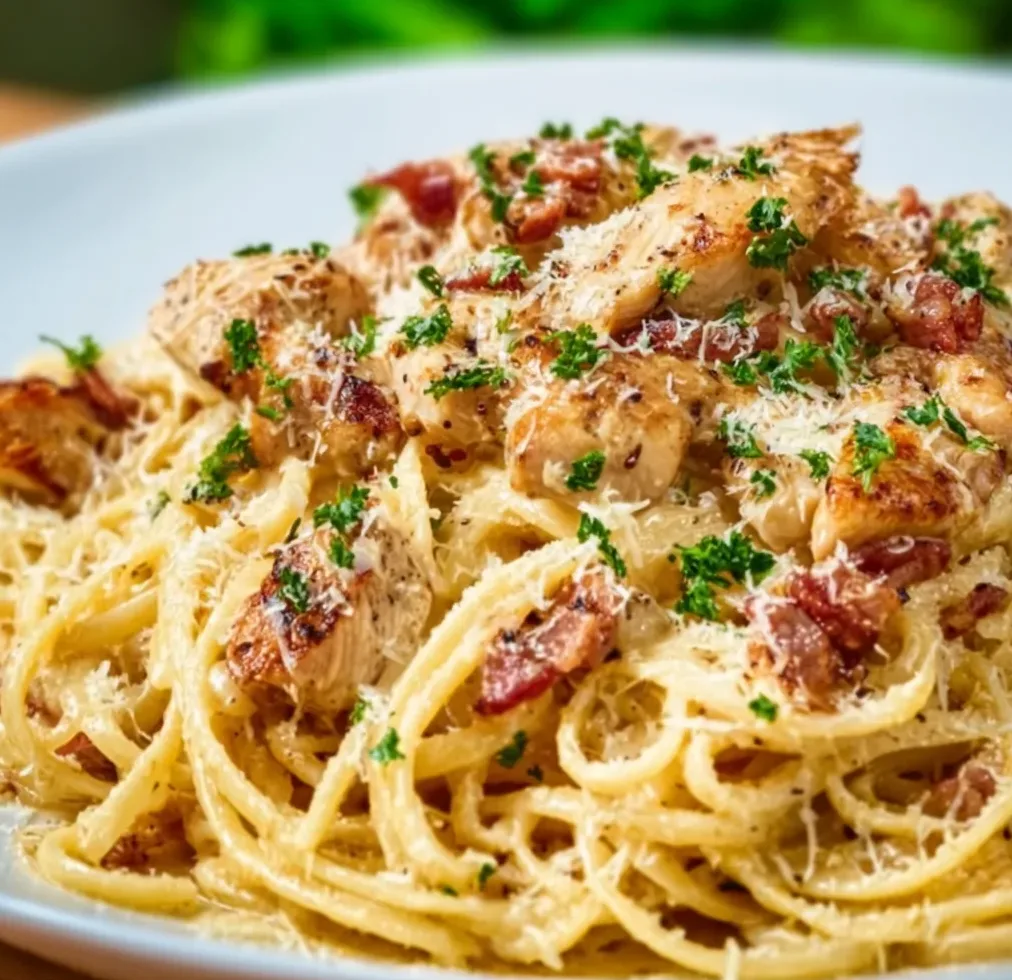
Chicken Carbonara is one of those magical dishes that transforms humble ingredients into something utterly divine. The first time I made it, the sizzle of pancetta hitting the hot pan filled my kitchen with an aroma so intoxicating I nearly forgot about the pasta boiling on the stove! There’s something deeply satisfying about watching those silky egg yolks transform into a luxurious sauce that clings to every strand of spaghetti. If you’re craving a restaurant-quality pasta that comes together in less than 30 minutes, this classic carbonara recipe is about to become your new weeknight hero.
Recipe
Print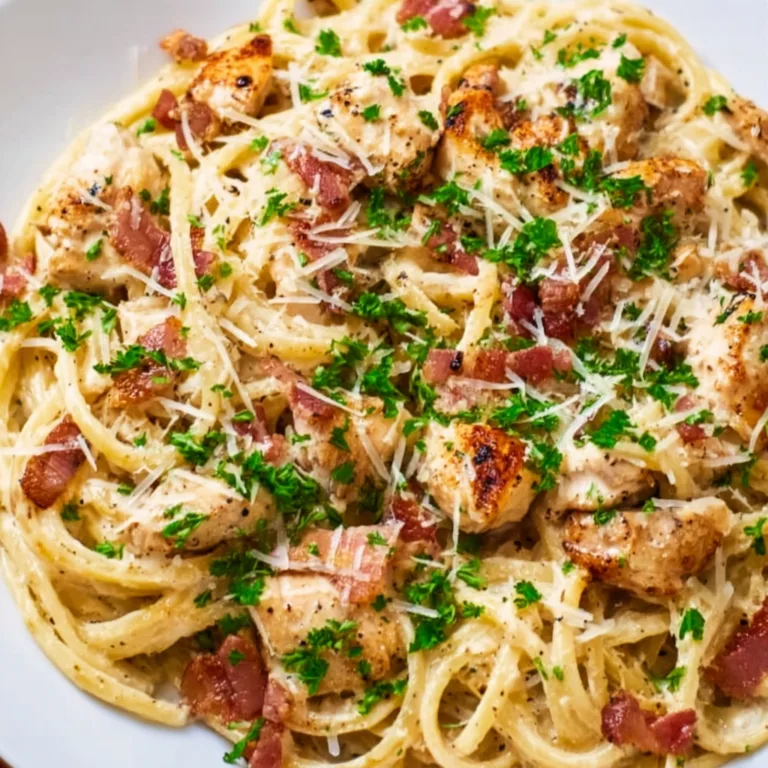
Classic Chicken Carbonara Recipe
This Classic Chicken Carbonara is creamy, rich, and incredibly satisfying. Tender chicken, pasta, and a silky sauce made with eggs and cheese create a comforting and easy dinner dish.
- Total Time: 30 minutes
- Yield: 2 servings
Ingredients
For the Pasta:
200 g pasta (spaghetti or fettuccine)
For the Chicken:
2 chicken breasts (sliced)
1 tablespoon olive oil
Salt and pepper to taste
For the Sauce:
2 eggs
1/2 cup grated parmesan cheese
1/2 cup heavy cream
2 cloves garlic (minced)
Optional:
Fresh parsley
Black pepper
Extra parmesan
Instructions
1. Cook pasta according to package instructions and reserve some pasta water.
2. Season and cook chicken in olive oil until golden, then set aside.
3. In a bowl, whisk eggs, parmesan, and cream.
4. In the same pan, sauté garlic briefly.
5. Add cooked pasta and chicken back to the pan.
6. Remove from heat and pour in the sauce mixture.
7. Toss quickly to coat (use pasta water if needed).
8. Serve immediately with parsley and extra parmesan.
Notes
Remove pan from heat before adding eggs to avoid scrambling.
Use pasta water to adjust sauce consistency.
Serve immediately for best texture.
Use fresh parmesan for best flavor.
- Prep Time: 10 minutes
- Cook Time: 20 minutes
- Category: Main Course
- Method: Stovetop
- Cuisine: Italian
Why You’ll Love This Chicken Carbonara
A Perfect Balance of Flavors and Textures
There’s something magical about the way carbonara components work together. The saltiness from the pancetta or bacon perfectly complements the rich creaminess of the egg-based sauce. Adding chicken brings a hearty protein element that makes this dish truly satisfying. I love how the black pepper adds tiny bursts of heat that cut through the richness. The contrast between the silky sauce, tender chicken, and crispy pancetta bits creates a textural symphony that keeps you coming back for “just one more bite” until suddenly—oops!—your plate is empty and you’re eyeing the serving bowl for seconds.
Quick Enough for Weeknights, Impressive Enough for Company
One of my favorite things about Chicken Carbonara is how it strikes that perfect balance between everyday easy and dinner-party worthy. The entire dish comes together in about 25 minutes—roughly the time it takes to boil pasta—yet tastes like something that required hours of preparation. I’ve served this on harried Tuesday nights when I needed dinner on the table fast, and I’ve made it for impromptu gatherings when friends dropped by unexpectedly. The look of pure delight on everyone’s faces as they twirl those first forkfuls is absolutely priceless. It’s my secret weapon for appearing effortlessly capable in the kitchen.
Essential Tips & Tricks
Mastering the Sauce Without Scrambling
The trickiest part of carbonara is achieving that silky-smooth sauce without ending up with scrambled eggs. The key is temperature control. I always take the pan completely off the heat before adding the egg mixture. The residual warmth from the pasta and pan is enough to create the perfect sauce consistency. Another game-changer: reserve at least 1/2 cup of starchy pasta water before draining. This liquid gold contains starches that help emulsify the sauce and give it that restaurant-quality texture. Add it gradually while tossing everything together, watching as the sauce transforms into a glossy coating that hugs every strand of pasta.
Ingredient Selection Makes All the Difference
Let’s talk quality ingredients—they truly matter here. Traditional carbonara uses guanciale (cured pork jowl), but pancetta or good bacon work beautifully too. For chicken, thighs provide more flavor and moisture than breast meat, though either works. The cheese should be genuine Pecorino Romano or Parmigiano-Reggiano—the pre-grated stuff in green canisters simply won’t create the same depth of flavor. Freshly cracked black pepper makes a noticeable difference compared to pre-ground. If you’re feeling adventurous, try adding a clove of minced garlic like in my Garlic Butter Steak with Parmesan Cream Sauce for an American twist.
Serving Ideas & Creative Variations
Perfect Pairings to Complete Your Meal
Chicken Carbonara is rich, so I like pairing it with something bright and acidic to balance the meal. A simple arugula salad dressed with lemon juice and olive oil makes the perfect counterpoint. For wine lovers, a crisp Pinot Grigio or light Chardonnay complements without overwhelming. If you’re serving this for a dinner party, start with a light appetizer like bruschetta or marinated olives. For bread, choose something with structure like a crusty baguette or ciabatta that can soak up any remaining sauce on your plate—because trust me, you won’t want to waste a single drop of this glorious sauce!
Exciting Twists on the Classic Recipe
While traditional carbonara is perfect as-is, there’s room for delicious experimentation. For a seafood variation, swap chicken for sautéed shrimp like in my Creamy Lemon Garlic Pan-Seared Scallops. For a vegetarian option, replace the meat with sautéed mushrooms, which provide a similar umami quality. Add peas for a pop of color and sweetness—just toss them in during the last minute of pasta cooking. For a spicy kick, incorporate red pepper flakes. Love garlic? Add 2-3 cloves, minced and sautéed with the pancetta. Craving greens? Wilt some spinach into the hot pasta just before serving for color and nutrition.
Storage & Troubleshooting Guide
Proper Storage and Reheating Techniques
Carbonara is best enjoyed immediately after preparation, but leftovers can be stored in an airtight container in the refrigerator for up to two days. When reheating, the trick is to prevent the sauce from separating or drying out. Add a splash of water or cream before gently warming over low heat, stirring constantly. Microwaving works in a pinch, but use 50% power and stir halfway through. The texture won’t be quite as silky as fresh carbonara, but the flavors actually develop beautifully overnight. If you know you’ll have leftovers, consider slightly undercooking the pasta initially so it doesn’t become mushy when reheated.
Troubleshooting Common Carbonara Challenges
The most common carbonara mishap is ending up with scrambled eggs instead of a smooth sauce. If this happens, don’t panic! You can often save it by immediately adding a splash of hot pasta water while vigorously stirring to reincorporate everything. If your sauce seems too thick, pasta water is again your friend—add a tablespoon at a time until you reach your desired consistency. Too thin? Let it sit for a minute; the sauce will naturally thicken as it cools slightly. If your pancetta or bacon didn’t crisp up properly, next time try starting with a cold pan to render more fat before increasing the heat to crisp.
Frequently Asked Questions
Can I make Chicken Carbonara ahead of time?
Carbonara is best made fresh, but you can prep ingredients in advance. Cook chicken and pancetta, shred cheese, and beat eggs with cheese. Store separately, then combine with fresh pasta just before serving.
What pasta shape works best for Chicken Carbonara?
Long pasta shapes like spaghetti, linguine, or fettuccine are traditional and ideal. The sauce clings beautifully to these shapes, creating the perfect bite with every twirl of your fork.
Is Chicken Carbonara safe to eat with raw eggs?
The residual heat from the pasta cooks the eggs to a safe temperature while maintaining creaminess. For extra safety, use pasteurized eggs or temper them by whisking a small amount of hot pasta water into the egg mixture first.
Can I use cream in authentic Chicken Carbonara?
Traditional carbonara doesn’t include cream—the creaminess comes solely from eggs and cheese. However, adding a splash of heavy cream creates a more foolproof, less likely-to-scramble sauce that’s still delicious.
What can I substitute for pancetta in Chicken Carbonara?
Bacon makes an excellent substitute with its smoky flavor. For a leaner option, try Canadian bacon or ham. Vegetarians can use smoked tofu or mushrooms sautéed with smoked paprika for umami depth.
Final Thoughts
Chicken Carbonara represents comfort food at its finest—simple ingredients transformed into something extraordinary through technique and love. The magic happens in those few moments when hot pasta meets egg and cheese to create that signature silky sauce. Don’t be intimidated by its reputation; with these tips, you’ll master this classic Italian dish in no time. Whether for a quick weeknight dinner or special occasion, this recipe delivers restaurant-quality results right in your kitchen. For more pasta inspiration and other delicious recipes, check out my Pinterest board where I’m always sharing new favorites!