

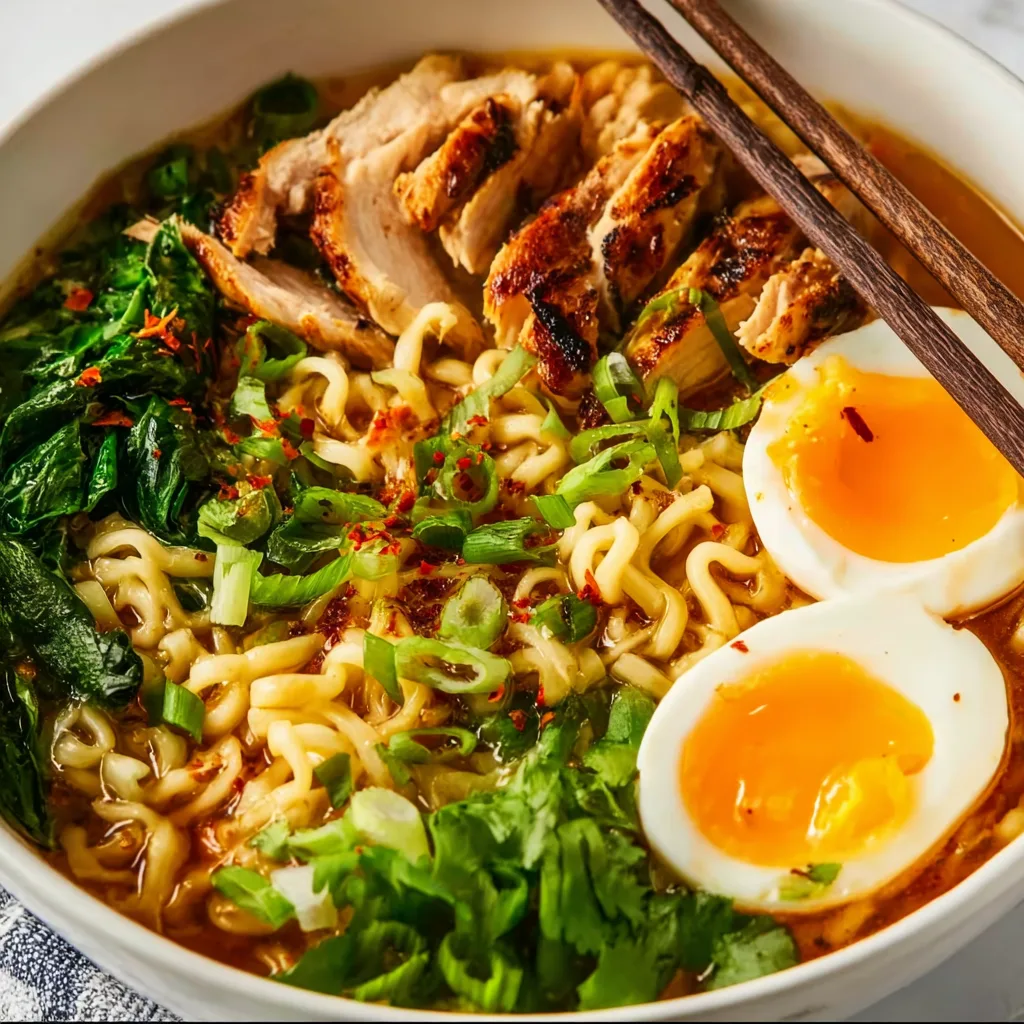
Homemade chicken ramen has become my ultimate comfort food ritual on chilly evenings when nothing else seems to warm both body and soul quite as effectively. There’s something almost magical about that first spoonful of rich broth, tender chicken, and perfectly cooked noodles that instantly transports me to a cozier state of mind. I discovered my love for crafting this dish during a particularly brutal winter when takeout wasn’t an option, and what began as necessity has evolved into one of my most treasured kitchen adventures. The beauty of homemade ramen lies in its perfect balance of simplicity and complexity—accessible ingredients creating layers of flavor that seem far more sophisticated than the sum of their parts.
Recipe
Print
Delicious Homemade Chicken Ramen Recipe
This Homemade Chicken Ramen is a comforting Japanese noodle soup packed with tender chicken, flavorful broth, and springy ramen noodles. With simple ingredients and rich umami flavor, this easy ramen recipe is perfect for a cozy homemade meal.
- Total Time: 25 minutes
- Yield: 2 servings
Ingredients
2 packs ramen noodles (discard seasoning packets)
2 cups cooked chicken breast, sliced or shredded
4 cups chicken broth
1 tablespoon soy sauce
1 teaspoon sesame oil
2 cloves garlic, minced
1 teaspoon grated ginger
2 green onions, sliced
1 cup baby spinach
2 soft boiled eggs
1/2 cup sliced mushrooms
1 tablespoon chili oil (optional)
Instructions
1. Bring chicken broth to a gentle simmer in a large pot over medium heat.
2. Add minced garlic and grated ginger.
3. Stir in soy sauce and sesame oil.
4. Add sliced mushrooms and cook for about 3–4 minutes until tender.
5. Add ramen noodles and cook according to package instructions until tender.
6. Stir in baby spinach and cook for about 1 minute until wilted.
7. Divide noodles and broth into serving bowls.
8. Top each bowl with sliced chicken, soft boiled eggs, and green onions.
9. Drizzle chili oil on top if desired.
10. Serve hot and enjoy.
Notes
Use rotisserie chicken for a faster ramen recipe.
Add corn, bamboo shoots, or seaweed for extra authentic toppings.
Soft boiled eggs add rich flavor and protein.
Adjust soy sauce depending on how salty you prefer the broth.
- Prep Time: 10 minutes
- Cook Time: 15 minutes
- Category: Dinner
- Method: Stovetop
- Cuisine: Japanese
Why You’ll Love This Homemade Chicken Ramen
A Symphony of Flavors in One Bowl
The magic of homemade chicken ramen lies in its incredible depth of flavor that simply can’t be replicated by instant packets. Each spoonful delivers a harmony of umami richness from the soy and miso, gentle heat from ginger and garlic, and that soul-satisfying chicken essence that forms the backbone of the broth. I love how the aromatics bloom in the hot liquid, releasing their fragrance in waves that hit you before the first taste. The noodles provide the perfect chewy texture against tender chicken pieces, while soft-boiled eggs contribute their silky, golden centers. This isn’t just soup—it’s a complete sensory experience that evolves with each bite.
Customizable to Your Taste
What truly makes this homemade chicken ramen special is how easily it adapts to your preferences and what’s available in your kitchen. Don’t have bok choy? Spinach works beautifully. Prefer a spicier profile? Add a dollop of chili oil or sriracha to elevate the heat. The protein is equally flexible—leftover rotisserie chicken transforms this into a 30-minute meal, while raw chicken thighs simmered in the broth infuse even more flavor. I’ve made this recipe during all seasons, adjusting ingredients based on what looks fresh at the market. Sometimes I’ll add corn for sweetness or mushrooms for earthiness. The foundation stays consistent while allowing endless personalization, making it a recipe you’ll turn to again and again.
Essential Tips & Tricks
Building a Better Broth
The soul of exceptional chicken ramen lives in its broth foundation. I’ve learned through many batches that patience truly pays off here—allow at least 20 minutes of gentle simmering for the aromatics to release their flavor. For deeper complexity, roast your chicken bones before adding them to the pot, which creates those rich caramelized notes that elevate homemade broth beyond store-bought versions. Another game-changer is adding a piece of kombu (dried kelp) and a handful of dried shiitake mushrooms to your stock for an umami boost that transforms the entire profile. Remove them before serving, but their essence remains. Don’t rush this step—it’s where the magic happens that separates good ramen from unforgettable ramen.
Perfecting Your Toppings
The toppings aren’t just garnish—they’re integral components that complete the homemade chicken ramen experience through contrasting textures and complementary flavors. For eggs with that coveted jammy center, cook them exactly 6.5 minutes in boiling water, then immediately transfer to ice water. The key to those beautiful halves is using a sharp knife dipped in hot water between cuts. For vegetables, avoid overcooking—they should retain some crispness as they’ll continue softening in the hot broth. I’ve found that quick-pickling some thinly sliced radishes or carrots (just rice vinegar, sugar, and salt for 15 minutes) adds a bright acidity that cuts through the richness.
Finally, don’t overlook the power of fresh herbs—a scatter of cilantro, green onions, or Thai basil lifts the entire bowl.
Serving Ideas & Creative Variations
Family-Style Ramen Bar
Transform dinner into an interactive experience by setting up a build-your-own ramen station. I love arranging individual bowls of broth and noodles alongside platters of toppings—thinly sliced chicken, halved eggs, chopped scallions, bean sprouts, corn kernels, nori strips, and various sauces. Everyone customizes their perfect bowl, making it ideal for families with varying preferences. This approach has saved countless dinners at my house when pleasing different palates seemed impossible. It’s also become our favorite casual entertaining strategy for small gatherings—guests always appreciate the personalization option, and the communal assembly creates a natural conversation starter. Plus, it’s a fantastic way to introduce hesitant eaters to new ingredients in a low-pressure setting.
Seasonal Ramen Adaptations
The versatility of homemade chicken ramen makes it perfect for seasonal adaptations. In summer, I lighten the broth with more citrus notes—a squeeze of lime and extra ginger creates a refreshing variation that doesn’t feel heavy. Add corn cut fresh from the cob and quick-blanched asparagus for seasonal brightness. Come autumn, I incorporate roasted kabocha squash cubes and a drizzle of chili oil for warming depth. Winter versions benefit from star anise in the broth and extra garlic, while spring calls for tender pea shoots and fresh herbs.
The foundation remains constant while the accents shift with what’s available and what your body craves. This adaptability is why ramen has become my year-round comfort food rather than just a cold-weather staple.
Storage & Troubleshooting Guide
Proper Storage Techniques
Storing homemade chicken ramen properly ensures you’ll enjoy it just as much the second time around. The cardinal rule: store components separately. The broth can be refrigerated for up to 4 days or frozen for 3 months in airtight containers. I portion mine in various sizes—individual servings for quick lunches and larger batches for family meals. Cooked noodles should be rinsed under cold water, tossed with a tiny bit of oil to prevent sticking, and stored separately; they’ll last 2-3 days refrigerated. Prepare fresh noodles when reheating frozen broth for best results. Toppings like eggs and vegetables also deserve their own containers to maintain texture integrity.
When reheating, bring the broth to a simmer separately, then add room-temperature noodles just before serving to prevent them from becoming mushy.
Troubleshooting Common Issues
Even experienced cooks encounter challenges with homemade ramen. If your broth lacks depth, try adding a umami booster—a splash of fish sauce, a teaspoon of miso paste, or a few drops of soy sauce can work wonders. For cloudy broth, ensure you’re maintaining a gentle simmer rather than a rolling boil, and consider straining through cheesecloth. Noodles turning gummy? You’re likely overcooking them—they should be slightly firmer than you prefer as they’ll continue cooking when added to hot broth. Eggs with rubbery whites usually mean the water was boiling too vigorously; maintain a gentle boil instead.
For bland chicken, try marinating it beforehand in soy, ginger, and garlic, or simply season it more generously before adding to the soup. Remember that ramen improves with practice, and each batch teaches you something new.
Frequently Asked Questions
Can I make homemade chicken ramen ahead of time?
Absolutely! Prepare the broth and toppings 1-2 days ahead, storing separately. Cook fresh noodles just before serving for the best texture and flavor. This makes weeknight homemade chicken ramen completely doable.
What’s the best substitute for traditional ramen noodles?
Rice noodles work well for gluten-free options, while spaghetti or linguine can substitute in a pinch. Look for noodles with some chew that can stand up to hot broth without becoming soggy.
How can I make my broth more flavorful?
Roast chicken bones before simmering, add kombu or dried mushrooms for umami depth, and don’t rush the process. A splash of rice vinegar or mirin at the end brightens all the flavors.
Can I make vegetarian ramen using this recipe?
Yes! Substitute vegetable broth and add extra mushrooms for depth. Miso paste, soy sauce, and a touch of sesame oil create richness without meat. Top with tofu for protein.
Why are my soft-boiled eggs difficult to peel?
Use eggs that aren’t super fresh (5-7 days old is ideal), and plunge them into ice water immediately after cooking. Gently crack and roll the egg on a countertop before peeling under running water.
Final Thoughts
Creating homemade chicken ramen from scratch connects us to culinary traditions while allowing for personal expression through each customized bowl. I’ve found this dish to be both a meditation when cooking solo and a celebration when shared with others. The process teaches patience and attention to detail, while the results deliver comfort that feels both familiar and exciting with each variation. What began as my kitchen experiment has become a signature dish friends request regularly. I encourage you to embrace the journey of perfecting your own homemade chicken ramen—it’s infinitely rewarding and surprisingly forgiving. And don’t forget to share your creations on Pinterest to inspire others on their ramen adventures!