

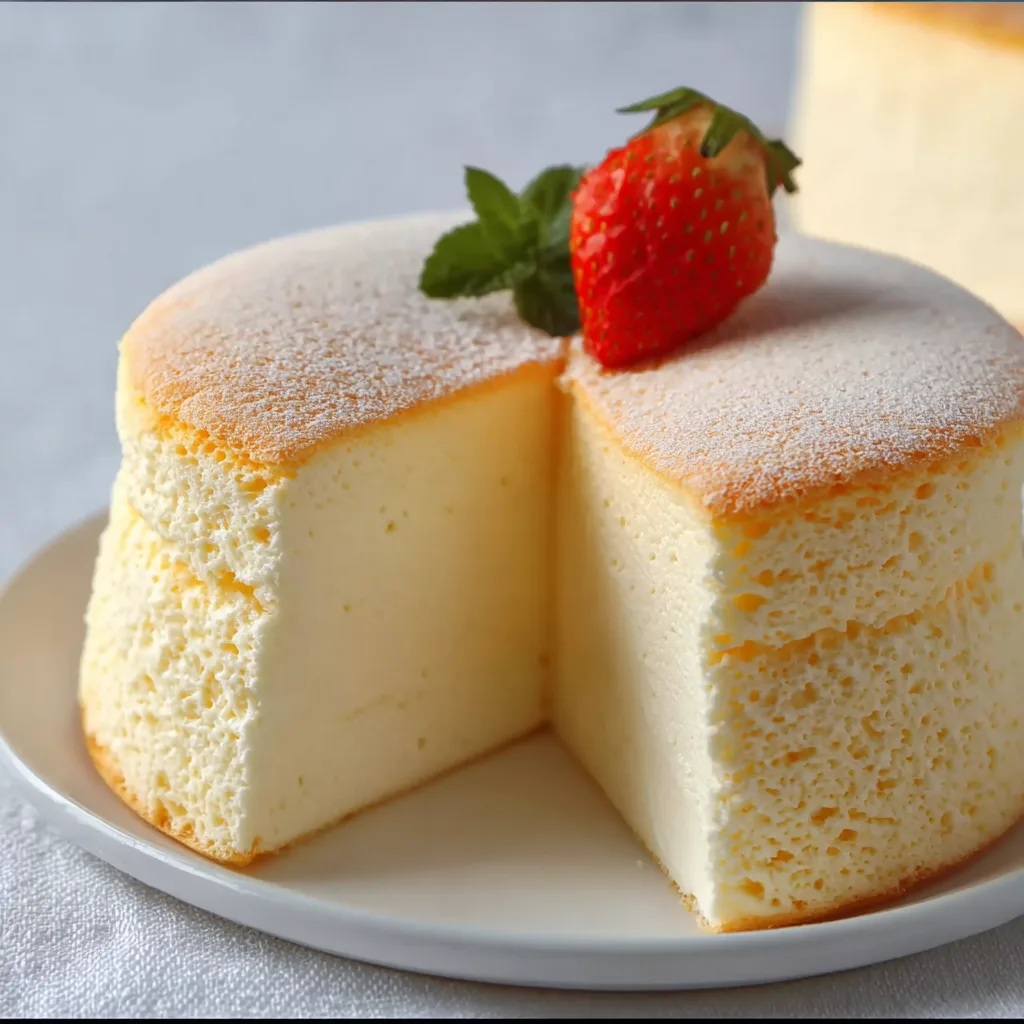
The Fluffy Japanese Cotton Cheesecake has completely changed my dessert game. With its cloud-like texture that quivers slightly with each bite, this isn’t your typical dense New York-style cheesecake. Instead, it’s a heavenly marriage between soufflé and cheesecake that melts on your tongue. I still remember the first time I made it—my kitchen filled with the warm, vanilla-scented air as my family gathered around, waiting impatiently for it to cool. If you’re looking for a showstopper that’s both elegant and comforting, this Japanese-inspired delight is absolutely worth mastering.
Recipe
Print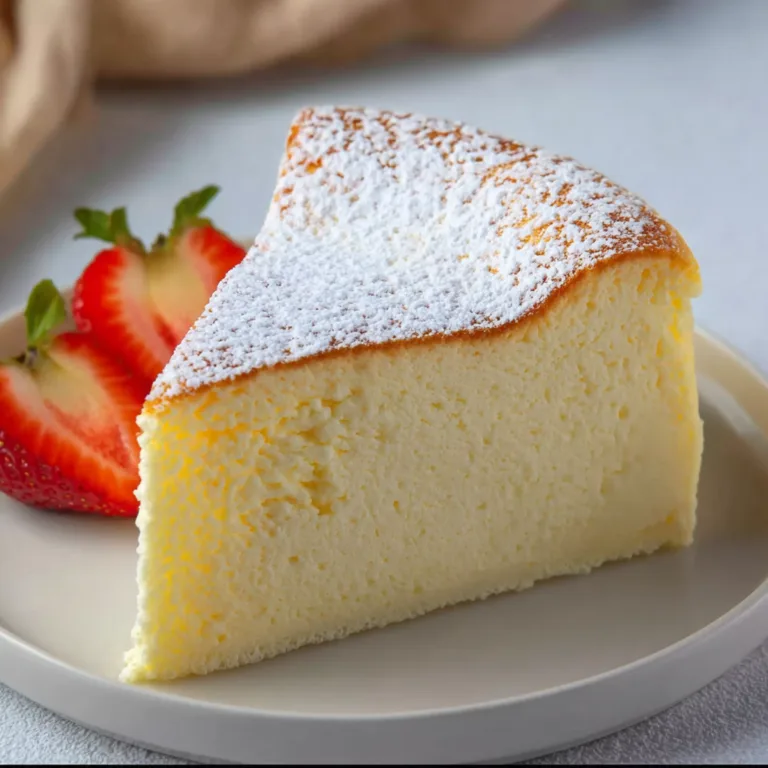
Fluffy Japanese Cotton Cheesecake Recipe
This Fluffy Japanese Cotton Cheesecake is ultra light, jiggly, and perfectly balanced between creamy and airy. With a gentle sweetness and cloud-like texture, it’s a dreamy dessert that melts in your mouth and feels elegant yet comforting.
- Total Time: 90
- Yield: 8 slices
Ingredients
7 oz (200g) cream cheese, softened
1/4 cup (60ml) milk
1/4 cup (60g) unsalted butter
1/2 cup (60g) cake flour (or all-purpose flour, sifted)
2 tablespoons cornstarch
1/4 teaspoon salt
5 large eggs, separated
1/2 teaspoon cream of tartar
1/2 cup (100g) granulated sugar
Powdered sugar for dusting (optional)
Instructions
1. Preheat oven to 320°F (160°C). Grease and line an 8-inch round cake pan with parchment.
2. In a small saucepan, heat cream cheese, milk, and butter over low heat. Stir until smooth, then let cool.
3. Whisk in sifted flour, cornstarch, and salt until just combined. Add egg yolks and mix until smooth. Set aside.
4. In a clean bowl, beat egg whites with cream of tartar until foamy. Gradually add sugar and beat until soft peaks form.
5. Gently fold meringue into the yolk mixture in 3 parts until fully incorporated.
6. Pour batter into prepared pan. Tap pan to release air bubbles.
7. Place the pan in a larger pan filled with 1 inch of hot water (water bath).
8. Bake for 60–70 minutes until top is lightly golden and center is set.
9. Turn off oven, crack door, and let cheesecake cool inside for 15 minutes before removing.
10. Cool completely, then refrigerate at least 4 hours before serving. Dust with powdered sugar if desired.
Notes
• Use cake flour for best texture.
• Don’t skip the water bath—it prevents cracking and ensures even baking.
• Cheesecake will deflate slightly after cooling—this is normal.
- Prep Time: 20
- Cook Time: 70
- Category: Dessert
- Method: Baked
- Cuisine: Japanese
- Diet: Vegetarian
Why You’ll Love This Fluffy Japanese Cotton Cheesecake
A Texture Unlike Any Other Cheesecake
The magic of Japanese Cotton Cheesecake lies in its impossibly light texture. Unlike traditional cheesecakes that sit heavy in your stomach, this one feels like eating a sweet cloud. The first time I served it at a dinner party, my friend Mia actually closed her eyes with each bite, savoring how it dissolved on her tongue. The secret is in the whipped egg whites that get gently folded into the batter, creating millions of tiny air bubbles. These bubbles expand during baking and give the cake its signature jiggly bounce when it’s fresh from the oven. It’s less sweet than American versions, letting the delicate cream cheese flavor shine through.
Perfect for Special Occasions
There’s something about presenting a Fluffy Japanese Cotton Cheesecake that elevates any gathering. When I brought one to my sister’s birthday brunch, everyone stopped mid-conversation to watch it gently wobble as I set it down. Its pale golden crown and perfectly smooth sides make it look professionally made, even when you’re a beginner. What I love most is how versatile it is for occasions—elegant enough for anniversary dinners but comforting enough for Sunday family dessert. The subtle sweetness pairs beautifully with afternoon tea or coffee, making it perfect for those moments when you want something special without being overwhelmingly rich or heavy.
Essential Tips & Tricks
Mastering the Water Bath
The water bath technique is non-negotiable for achieving that perfect cotton-soft texture. My first attempt skipped this step, and I ended up with a cracked, dense cake that was nothing like the cloudlike creation I was hoping for. Fill a larger pan with hot water about halfway up the sides of your springform pan. This creates a gentle, humid environment that prevents the cheesecake from drying out or rising too quickly. Be extremely careful when transferring it to the oven—I learned the hard way that splashed water creates soggy bottoms!
I now place my filled springform pan in the larger pan already in the oven, then carefully pour in the hot water. This simple adjustment made all the difference in my baking success.
Temperature Control Is Everything
Nothing will ruin your Japanese Cotton Cheesecake faster than improper temperature management. All ingredients must be at room temperature before you begin—cold cream cheese creates lumps that never fully incorporate. I take everything out at least two hours before starting. The baking temperature curve is equally crucial. Start hot (around 350°F) for the first 15 minutes to help the cake rise, then immediately reduce to 320°F to gently cook through without browning too much. The slow cooling process is where many go wrong. After baking, turn off the oven, crack the door open with a wooden spoon, and let the cake cool gradually for an hour. This prevents the dramatic temperature change that causes deflation and cracks.
Serving Ideas & Creative Variations
Seasonal Fruit Pairings
Nothing complements the delicate flavor of this cheesecake like fresh seasonal fruits. In summer, I love topping it with macerated strawberries that create a gorgeous ruby syrup that soaks slightly into the cake’s surface. For fall gatherings, thinly sliced poached pears fanned across the top with a drizzle of caramel creates an elegant presentation. The subtle tanginess of the cheesecake balances perfectly with the natural sweetness of fruits. My personal favorite combination came about by accident—I had some leftover passionfruit pulp in the fridge and spooned it over a slice. The tropical acidity cut through the creamy cake in a way that made my taste buds dance. Try serving with a complementary dessert for a truly impressive spread.
Global Flavor Infusions
The neutral canvas of Japanese Cotton Cheesecake welcomes flavor experiments beautifully. I’ve fallen in love with adding 2 tablespoons of matcha powder for a gorgeous green tea version that pairs wonderfully with red bean paste on the side. For a Nordic twist, fold in 1 teaspoon of ground cardamom and top with lingonberry compote. The most surprising success was my Mexican-inspired version with cinnamon, a touch of cayenne, and a chocolate drizzle—the spicy warmth against the cool, soft cake created an unforgettable contrast. Don’t be afraid to play with extracts either—replacing vanilla with almond or coconut can transport this Japanese classic to entirely new culinary territories.
Storage & Troubleshooting Guide
Keeping Your Cheesecake Fresh
Proper storage ensures your Fluffy Japanese Cotton Cheesecake maintains its cloud-like texture for days. Unlike denser cheesecakes, this delicate creation needs special attention. Always cool completely before refrigerating to prevent condensation from making the top soggy. I place mine uncovered in the refrigerator for 30 minutes, then gently wrap in plastic without touching the surface. This method keeps it fresh for up to three days, though the texture is truly magical on day one. For longer storage, individual slices can be frozen—wrap each in plastic, then foil, and freeze for up to a month. Thaw overnight in the refrigerator, then let stand at room temperature for 30 minutes before serving to restore that melt-in-your-mouth quality.
Rescuing Common Mishaps
Even experienced bakers face challenges with this technical cake, but most problems have simple fixes. If your cake deflates dramatically after baking, you likely opened the oven door too early or cooled it too quickly. Next time, resist peeking and follow the slow cooling method religiously. For a cracked top, your oven was probably too hot—invest in an oven thermometer, as most run hotter than their settings indicate. If the texture seems rubbery rather than fluffy, you may have overmixed after adding the flour or beaten the egg whites too stiffly. The good news? Even imperfect Japanese Cotton Cheesecake tastes delicious and can be saved with strategic toppings or by transforming it into trifle layers.
Frequently Asked Questions
What makes Japanese Cotton Cheesecake different from regular cheesecake?
Fluffy Japanese Cotton Cheesecake incorporates whipped egg whites for a soufflé-like texture that’s lighter and jiggly, unlike the dense, creamy texture of traditional cheesecakes. It’s also less sweet with a more delicate flavor profile.
Can I make this cheesecake without a springform pan?
Yes, you can use a regular cake pan lined with parchment paper that extends up the sides for easy removal. Make sure it’s at least 3 inches deep to accommodate the rise.
Why did my cheesecake crack on top?
Cracks usually occur from baking at too high a temperature, cooling too quickly, or overmixing the batter. Use an oven thermometer and follow the slow cooling method to prevent this.
Can I make this cheesecake ahead for a party?
Absolutely! It actually benefits from chilling overnight, allowing flavors to develop. Just add any toppings right before serving for the best presentation.
Is it necessary to use a water bath?
Yes, the water bath provides gentle, even heat and humidity that’s essential for the cheesecake’s signature texture. Skipping it will result in a denser, drier cake that may crack.
Final Thoughts
Creating the perfect Fluffy Japanese Cotton Cheesecake might take a practice run or two, but the results are absolutely worth it. There’s something magical about watching friends take their first bite and seeing their expressions transform as they experience that unique, cloudlike texture. I’ve found that this cheesecake has become my signature dessert—the one friends request for special occasions or when they need a little comfort with their sweetness. Whether you keep it classic or experiment with creative variations, this Japanese treasure brings a touch of elegant simplicity to any table. Find more inspiration for your baking adventures on Pinterest.