

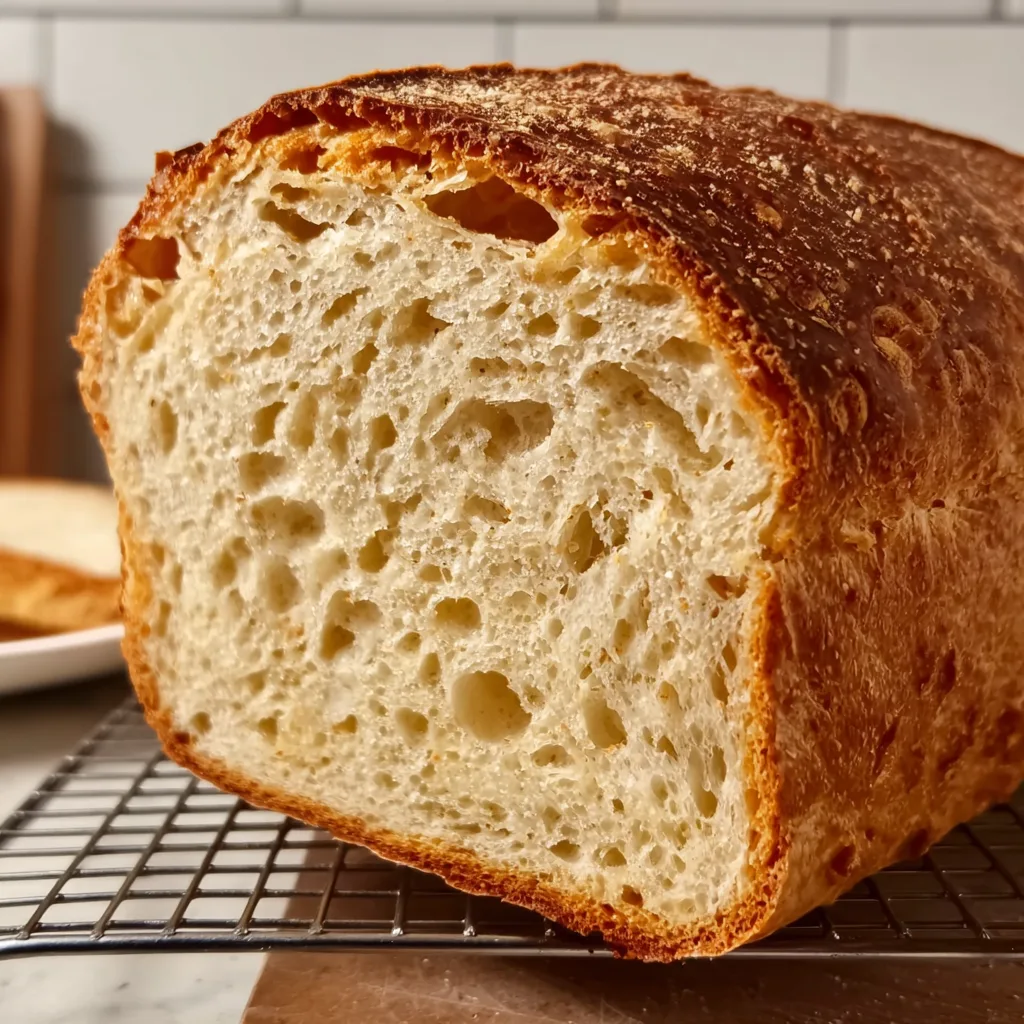
My journey creating the perfect Golden Gluten-Free Sourdough Loaf has been nothing short of a delicious adventure. After countless flour-dusted countertops and recipe tweaks, I’ve finally mastered a loaf that rivals its gluten-containing cousins. This bread delivers that coveted crispy crust and tender, airy interior that traditional sourdough lovers crave, but without a speck of gluten. The slightly tangy flavor develops beautifully during the long fermentation, creating depth that store-bought gluten-free breads simply can’t match. If you’ve been missing real bread since going gluten-free, this recipe will bring that joyful bread experience back into your life. I still remember the first time my kitchen filled with that unmistakable sourdough aroma from my very first successful loaf.
Recipe
Print
Golden Gluten-Free Sourdough Loaf
Golden Gluten-Free Sourdough Loaf is crusty on the outside, soft and airy inside, and made with a tangy gluten-free starter for a healthy, delicious bread alternative.
- Total Time: 8 hours
- Yield: 1 loaf
Ingredients
1 cup gluten-free sourdough starter
2 1/2 cups gluten-free flour blend
1 1/4 cups warm water
1 tbsp olive oil
1 tsp salt
1 tsp honey or maple syrup
Instructions
1. In a large bowl, mix gluten-free sourdough starter with warm water and honey.
2. Add gluten-free flour blend, olive oil, and salt.
3. Mix until a thick batter-like dough forms.
4. Cover and let rise at room temperature for 6–8 hours.
5. Transfer dough to a lined loaf pan and smooth the top.
6. Let rise again for 1–2 hours until slightly puffy.
7. Preheat oven to 400°F.
8. Bake for 40–45 minutes until golden and firm.
9. Let cool completely before slicing.
Notes
Use a high-quality gluten-free flour blend for best texture.
Dough will be wetter than traditional bread—this is normal.
Allow full cooling before slicing to avoid gumminess.
Store in an airtight container for up to 3 days.
Toast slices for best flavor and texture.
- Prep Time: 15 minutes
- Cook Time: 45 minutes
- Category: Bread
- Method: Baking
- Cuisine: Gluten-Free
Why You’ll Love This Golden Gluten-Free Sourdough Loaf
Perfect Texture & Flavor Profile
The magic of this Golden Gluten-Free Sourdough Loaf lies in its incredible texture. Unlike many dense, crumbly gluten-free breads, this loaf offers a chewy, open crumb that feels substantial between your fingers. The crust develops a gorgeous golden color (hence the name!) and that satisfying crackling sound when you squeeze it. Flavor-wise, it delivers that classic sourdough tanginess balanced with subtle nutty notes from the blend of gluten-free flours. I’ve found that a longer fermentation—around 12-18 hours—creates the most complex flavor profile. My neighbor actually thought I’d cheated and made regular sourdough when I shared a loaf last weekend! The slight sourness pairs beautifully with both sweet toppings like honey and savory options like avocado.
Digestive Benefits & Accessibility
Beyond the incredible taste, this Golden Gluten-Free Sourdough Loaf offers remarkable digestive benefits. The long fermentation process breaks down difficult-to-digest components in the gluten-free flours, making nutrients more bioavailable and gentler on sensitive systems. I’ve had several friends with non-celiac gluten sensitivity report that they can enjoy this bread without the usual discomfort they experience with commercial gluten-free options. It’s also incredibly accessible to make—no fancy equipment required beyond a dutch oven. The flexible timing works with busy schedules, as the dough can rest in the refrigerator for up to 24 hours during the final proof. This adaptability means fresh bread is possible even with unpredictable weekday commitments or weekend plans.
Essential Tips & Tricks
Mastering Your Gluten-Free Starter
Creating a thriving gluten-free sourdough starter is the foundation of a successful loaf. Unlike traditional starters, gluten-free versions benefit from slightly more frequent feedings in the beginning—aim for twice daily for the first week. I’ve found that equal parts brown rice flour and sorghum flour create the most reliable and active starter. Keep your starter in a warm spot (around 75-78°F is ideal) to encourage those wild yeasts to multiply. The texture will be different from wheat starters—expect something closer to thick pancake batter rather than a stretchy dough. Your nose is your best tool here; a healthy gluten-free starter should smell pleasantly tangy and yeasty, similar to yogurt or ripe fruit. Mine took about 10 days to become truly active, so patience is key!
Handling Wet Dough Successfully
Working with gluten-free sourdough dough requires different techniques than traditional bread. This dough will be significantly wetter and lack the elasticity of wheat dough—and that’s perfectly normal! Instead of kneading, you’ll use a folding technique that helps develop structure without the gluten network. Always keep your hands damp when handling the dough to prevent sticking. I recommend using a bowl scraper for folding rather than your hands directly. For shaping, a parchment sling makes transferring the delicate dough to your hot dutch oven much easier. If you’re struggling with an overly wet dough, try reducing the hydration by 5% in your next batch or check out our sourdough discard cinnamon quick bread for a simpler alternative while you perfect your technique.
Serving Ideas & Creative Variations
Pairing Suggestions for Maximum Enjoyment
This Golden Gluten-Free Sourdough Loaf shines in so many culinary contexts. For breakfast, try thick-cut slices lightly toasted and topped with cultured butter and honey—the slight tanginess of the bread creates a perfect contrast. For lunch, nothing beats a grilled cheese made with sharp cheddar and a thin layer of fig jam on this bread; the exterior develops an incredible crispness while the interior stays tender. I serve this bread alongside hearty soups like our Italian Penicillin Soup for dinner at least once a week. The bread’s sturdy texture makes it perfect for dipping without disintegrating. For an elegant appetizer, brush slices with olive oil, toast them, and serve with whipped ricotta topped with herbs and a drizzle of good olive oil. The bread’s flavor is complex enough to stand up to bold toppings but subtle enough not to overwhelm delicate spreads.
Flavor Variations to Explore
The base recipe for this Golden Gluten-Free Sourdough Loaf serves as a perfect canvas for creative variations. Adding 2 tablespoons of seeds (like sunflower, pumpkin, or flax) to the dough creates a lovely textural contrast and nutritional boost. My personal favorite variation includes 1 tablespoon of dried rosemary and a teaspoon of lemon zest folded into the dough just before the final rise—it creates an aromatic loaf that’s perfect alongside Mediterranean meals. For a sweeter option, incorporate dried cranberries and chopped walnuts for a breakfast bread that toasts beautifully. Experiment with different flour blends too; substituting 20% of the flour mix with buckwheat creates a more rustic, earthier loaf. Don’t be afraid to play with mix-ins, but start conservatively—about 1/3 cup total add-ins per loaf is ideal to maintain the bread’s structure while introducing new flavors.
Storage & Troubleshooting Guide
Keeping Your Bread Fresh Longer
Properly storing your Golden Gluten-Free Sourdough Loaf is essential for maintaining its quality. Unlike commercial gluten-free breads loaded with preservatives, this homemade version requires thoughtful storage. For the first 24 hours, store your cooled loaf cut-side down on a cutting board, allowing the crust to protect the interior. After that, I recommend slicing the entire loaf and freezing what you won’t consume within two days. Place parchment paper between slices before freezing for easy separation. For room temperature storage, a linen bread bag works better than plastic, which can make the crust soggy. If your bread does become stale, don’t toss it! Transformation into gluten-free croutons, breadcrumbs, or a savory bread pudding gives it new life. I’ve found that refreshing slightly stale slices with a light sprinkle of water before toasting works wonders to revive the texture.
Solving Common Baking Challenges
Even experienced bakers encounter challenges with gluten-free sourdough. If your loaf turns out too dense, your starter might not have been active enough—ensure it doubles within 4-6 hours after feeding before using it in your dough. For loaves that spread too much rather than rise upward, try reducing hydration slightly or using a proofing basket lined with well-floured linen to provide more structure during the final rise. Gummy interior typically indicates underbaking; invest in an instant-read thermometer and aim for an internal temperature of 205-210°F. If your crust isn’t as golden as you’d like, try brushing the loaf with a mixture of egg white and water before baking, or remove the dutch oven lid earlier in the baking process. Remember that each kitchen environment is different—humidity, altitude, and even the specific blend of flours can affect your results, so take notes and make small adjustments with each bake.
Frequently Asked Questions
Can I substitute regular flour in this recipe?
No, this recipe is specifically formulated for gluten-free baking. The techniques, hydration levels, and mixing methods are tailored to work without gluten’s structure-building properties.
How long does it take to make this Golden Gluten-Free Sourdough Loaf from start to finish?
The active work takes about 30 minutes total, but you’ll need 18-24 hours for fermentation and proofing, plus cooling time after baking.
Can I make this bread without a dutch oven?
Yes, though results may vary. A baking stone with a heat-safe bowl placed over the dough can create a similar steam environment for proper crust development.
Why did my bread turn out gummy inside?
Underbaking is usually the culprit. Use an internal thermometer to ensure the bread reaches 205-210°F, and allow it to cool completely before slicing.
How can I make my gluten-free starter more active?
Feed it consistently at the same times daily, use filtered water, and keep it in a warm spot (75-80°F). Adding a tablespoon of unsweetened pineapple juice can help jumpstart activity.
Final Thoughts
Creating this Golden Gluten-Free Sourdough Loaf has transformed my gluten-free baking experience. There’s something profoundly satisfying about pulling a perfectly golden, crackling loaf from the oven—especially when it’s gluten-free! The process connects us to thousands of years of bread-making tradition while embracing modern dietary needs. I encourage you to approach this recipe with patience and playfulness; each loaf teaches you something new. As you master this technique, you’ll find yourself with a valuable skill that brings joy to your table and possibly even becomes a signature gift for friends and family. Share your creations on Pinterest and join our community of gluten-free bakers discovering that dietary restrictions don’t have to mean culinary limitations.