

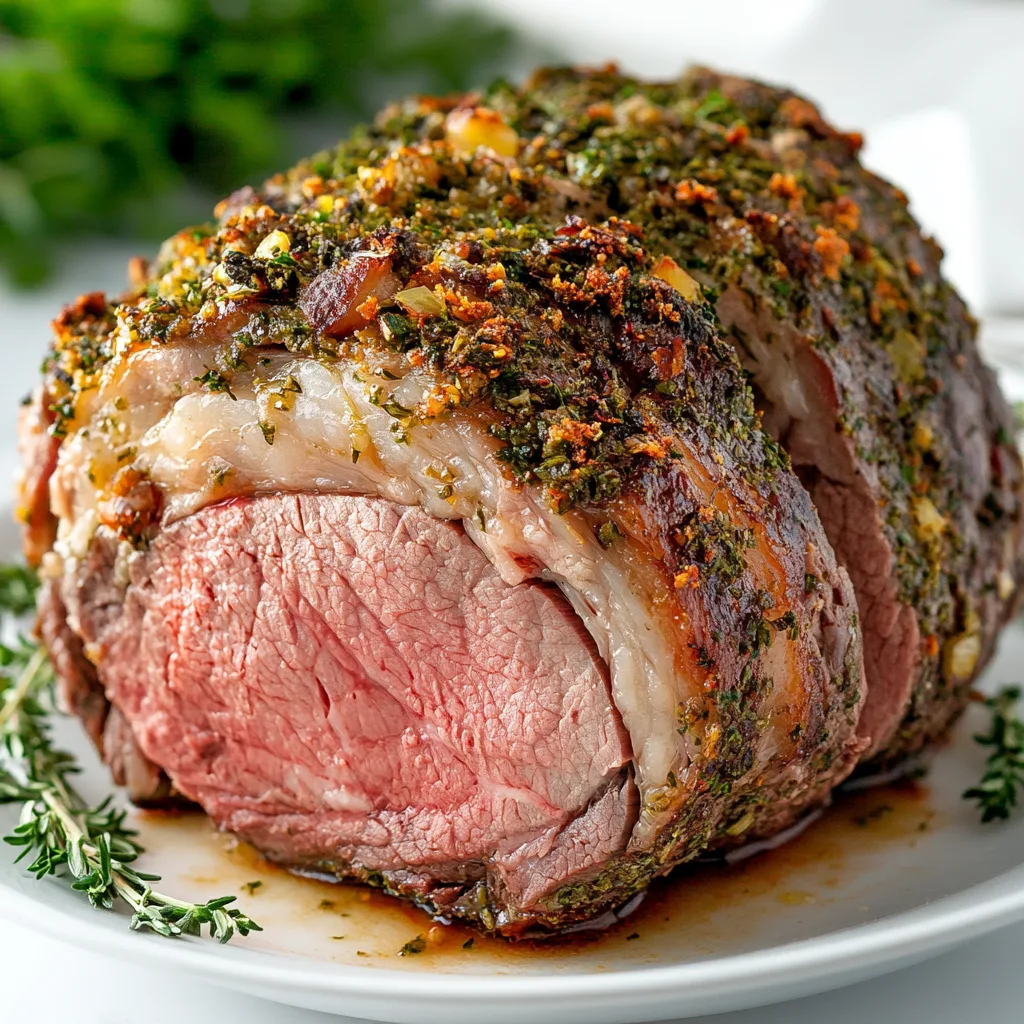
The aroma of a perfectly cooked Herb-Crusted Prime Rib Roast wafting through my kitchen brings back memories of Sunday family gatherings where conversation flowed as freely as the wine. There’s something magical about that moment when you slice into a prime rib and reveal the perfect pink center surrounded by that herb-infused crust. I’ve spent years perfecting this centerpiece dish, and I’m thrilled to share my secrets with you! This recipe combines simple techniques with bold flavors, creating a show-stopping roast that’s actually easier to make than you might think. Trust me, once you master this method, you’ll be the family’s designated roast master for every special occasion.
Table of Contents
Recipe
Print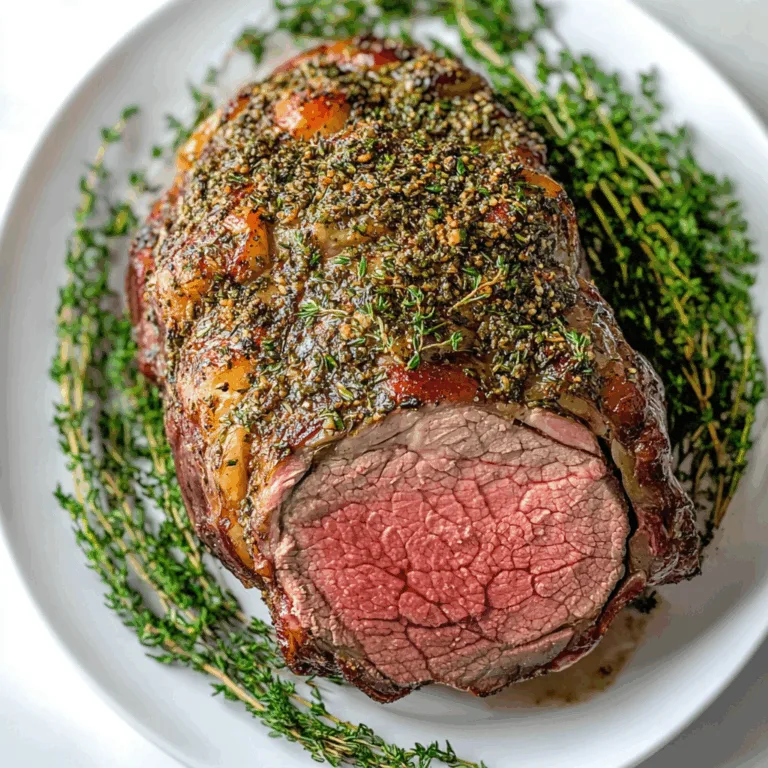
Herb-Crusted Prime Rib Roast Recipe | Juicy & Flavorful Holiday Roast
This herb-crusted prime rib roast is coated in a savory garlic and herb rub, then roasted to perfection—crispy on the outside, rosy and juicy inside.
- Total Time: 2 hours 20 minutes
- Yield: 6 servings
Ingredients
1 (5–6 lb) bone-in prime rib roast
2 tbsp olive oil
1 tbsp kosher salt
1 tbsp black pepper
6 cloves garlic, minced
2 tbsp fresh rosemary, finely chopped
2 tbsp fresh thyme, finely chopped
1 tbsp Dijon mustard
1 tsp onion powder
Instructions
1. Remove the prime rib from the fridge 2–3 hours before cooking to come to room temperature.
2. Preheat oven to 450°F (232°C).
3. In a small bowl, mix olive oil, garlic, herbs, mustard, salt, pepper, and onion powder to form a paste.
4. Pat the roast dry and rub the herb paste evenly over the entire roast.
5. Place the roast fat-side up on a rack in a roasting pan.
6. Roast at 450°F for 20 minutes, then reduce the heat to 325°F.
7. Continue roasting for 90–120 minutes, or until internal temperature reaches 130°F for medium-rare.
8. Remove roast, tent with foil, and let rest for 20–30 minutes before slicing.
Notes
Use a meat thermometer to avoid overcooking—130°F for medium-rare.
Leftovers make amazing sandwiches the next day.
For a deeper crust, sear the roast in a skillet before roasting.
- Prep Time: 20 minutes
- Cook Time: 2 hours
- Category: Dinner
- Method: Roasting
- Cuisine: American
Why You’ll Love This Herb-Crusted Prime Rib Roast
A Foolproof Method for Perfect Results
Let me tell you, I used to be terrified of cooking expensive cuts of meat until I discovered this method. The reverse sear technique is a game-changer for achieving that restaurant-quality result at home. By starting with a low temperature and finishing with high heat, you get perfect edge-to-edge doneness with a beautiful crust. I remember the first time I tried this method—my husband’s eyes widened with that first bite, and he whispered, “This is better than the steakhouse!” The low-and-slow approach gives you much more control, making it nearly impossible to overcook this precious cut of beef.
Flavor That Makes Memories
The herb crust isn’t just for show—it creates a flavor experience that guests will talk about for years. The aromatic herb blend of rosemary, thyme, and garlic infuses the meat as it cooks, creating layers of flavor that complement the rich beef without overpowering it. I add a touch of Dijon mustard underneath the herbs, which helps them stick while adding a subtle tang that cuts through the richness. Last Christmas, my normally chatty family fell completely silent when they took their first bites—that’s when you know you’ve created something truly special.
Essential Tips & Tricks
Selecting and Preparing Your Roast
Choosing the right cut is half the battle. Look for a well-marbled prime rib with a bright red color and a nice cap of fat on top—this natural basting layer is essential for flavor. I always ask my butcher to trim and tie the roast if it’s not already done. Let your meat come to room temperature for at least 2 hours before cooking; this step is non-negotiable for even cooking. I learned this the hard way after an expensive roast came out unevenly cooked because I rushed this step. Salt your roast generously the night before cooking—this dry brining process creates deeper flavor and juicier meat.
Temperature Mastery
The secret to a perfect prime rib isn’t just about timing—it’s about temperature control. Invest in a good meat thermometer; it’s worth every penny. For a medium-rare roast (my personal favorite), remove it from the oven when the internal temperature reaches 120°F, as it will continue cooking during rest. The temperature will rise about 5-10 degrees, giving you that perfect 130°F medium-rare. I once watched my father-in-law cut into a roast straight from the oven, and I nearly cried seeing all those precious juices run out! Always let your roast rest for at least 20-30 minutes before carving to allow the juices to redistribute.
Serving Ideas & Creative Variations
Classic Accompaniments with a Twist
A prime rib deserves worthy sidekicks. I love serving mine with horseradish cream sauce that balances the richness with a gentle heat. Simply mix prepared horseradish with sour cream, a splash of lemon juice, and a pinch of salt. For starches, try roasted garlic mashed potatoes or Yorkshire puddings that soak up the flavorful juices. My personal favorite veggie pairing is roasted Brussels sprouts with bacon and a drizzle of balsamic glaze. The slight bitterness and acidity cut through the richness of the meat perfectly. For a complete holiday menu, check out my Christmas dinner planning guide for timing and additional recipes.
Global Flavor Inspirations
While the classic herb crust is divine, don’t be afraid to explore international flavor profiles. For an Italian twist, add fennel seeds and orange zest to your herb blend. A Moroccan-inspired rub with cumin, coriander, and a touch of cinnamon creates an unexpected but delicious variation. My Japanese-inspired version uses miso paste mixed with the herbs for an umami-rich crust that caramelizes beautifully. I discovered this combination when experimenting one rainy Sunday, and it’s become a favorite for dinner parties when I want to surprise guests with something unique yet comforting.
Storage & Troubleshooting Guide
Making the Most of Leftovers
Prime rib leftovers are culinary gold! Store them in an airtight container in the refrigerator for up to 4 days. To reheat without overcooking, wrap slices in foil with a splash of beef broth and warm in a 300°F oven just until heated through. My favorite way to repurpose leftovers is in a decadent sandwich with caramelized onions and blue cheese on crusty bread. You can also dice the meat for hash with potatoes and eggs for a luxurious breakfast, or thinly slice it cold for a prime rib salad with arugula and shaved parmesan.
Rescuing Common Mishaps
Even experienced cooks encounter challenges. If your crust is browning too quickly, loosely cover the roast with foil to protect it. For a roast that’s undercooked, you can return it to a 375°F oven for a few minutes, but check the temperature frequently to avoid overcooking. If you’ve gone too far and it’s overcooked, don’t despair! Slice it very thinly and serve with extra au jus or a rich mushroom gravy to add moisture. I once salvaged an overcooked section by chopping it finely and using it in a rich beef stroganoff—my guests never suspected it wasn’t intentional!
Frequently Asked Questions
What’s the best cut of meat for Herb-Crusted Prime Rib Roast?
Choose a bone-in prime rib (also called standing rib roast) with good marbling. The bones add flavor and help with even cooking. For smaller gatherings, a 3-4 bone roast (about 6-8 pounds) works perfectly.
How much prime rib should I buy per person?
Plan for about ¾-1 pound per person for bone-in roasts or ½-¾ pound for boneless. This accounts for shrinkage during cooking and provides for some delicious leftovers.
Can I make the herb crust ahead of time?
Absolutely! Mix the herb paste up to 24 hours ahead and refrigerate in an airtight container. Apply it to the roast about an hour before cooking for maximum flavor infusion.
What’s the best way to carve a prime rib?
Remove the bones first by sliding a sharp knife along the bone line. Then place the roast flat-side down and cut into ½-inch slices against the grain for maximum tenderness.
How can I ensure my Herb-Crusted Prime Rib Roast has a crispy exterior?
For the perfect crust, pat the roast completely dry before applying herbs, and finish with a high-heat sear (500°F) for the last 10-15 minutes of cooking.
Final Thoughts
Creating a spectacular Herb-Crusted Prime Rib Roast isn’t just about following steps—it’s about embracing the process and understanding how each element contributes to the final result. The patience required for proper temperature control, the care taken in selecting quality ingredients, and the love infused in every step makes this more than just a meal—it’s a celebration. I hope this guide helps you create your own memorable moments around the table. There’s nothing quite like watching loved ones enjoy something you’ve prepared with such care. For more inspiration, check out my Pinterest board where I share seasonal variations and serving ideas for this magnificent centerpiece.