

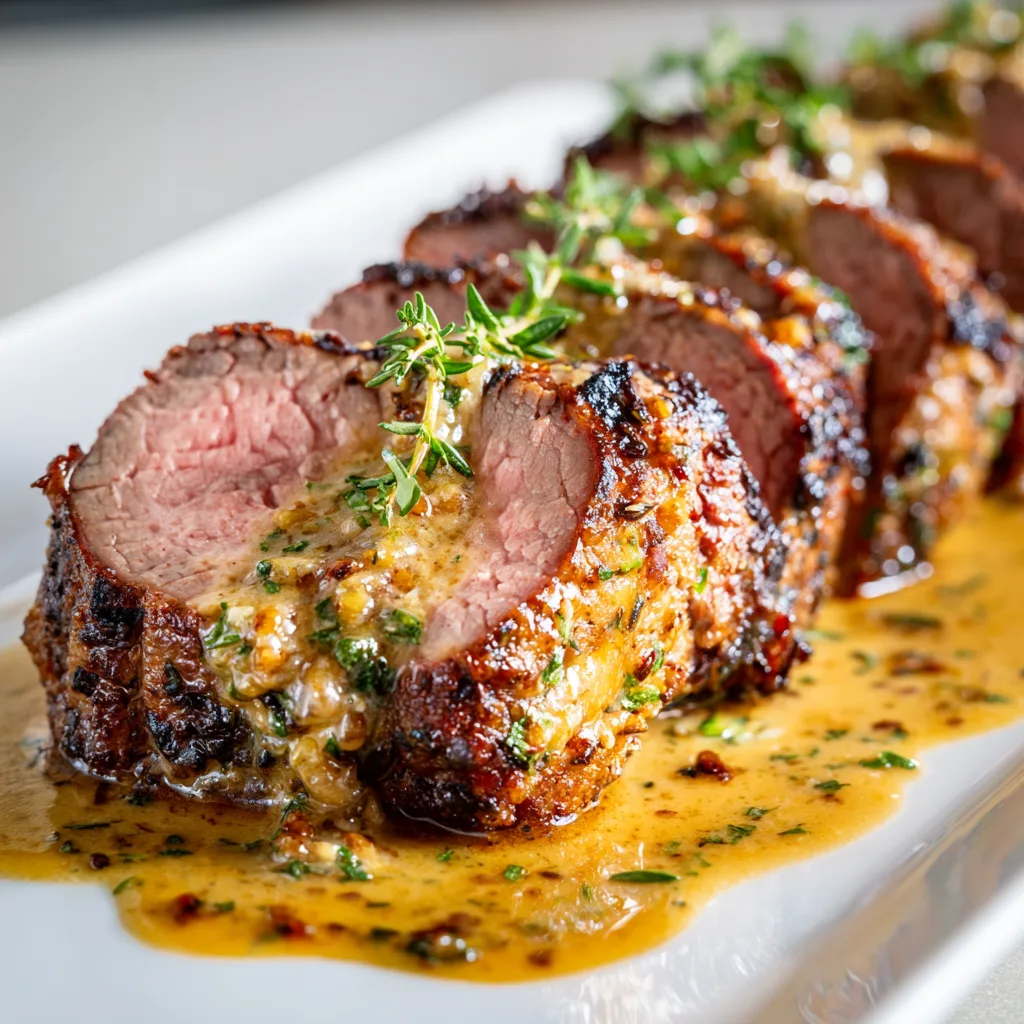
This maple mustard beef tenderloin transforms an ordinary dinner into something extraordinary. The first time I made it, my kitchen filled with the most intoxicating aroma—sweet maple mingling with tangy mustard and that perfectly seared beef. It’s become my go-to when I want to impress without stressing. The caramelized exterior gives way to the most tender, pink center that practically melts on your fork. Whether you’re planning a special occasion or simply craving something luxurious on a Tuesday, this recipe delivers restaurant-worthy results right in your home kitchen. Check out my other comfort food classics for more cozy inspiration!
Recipe
Print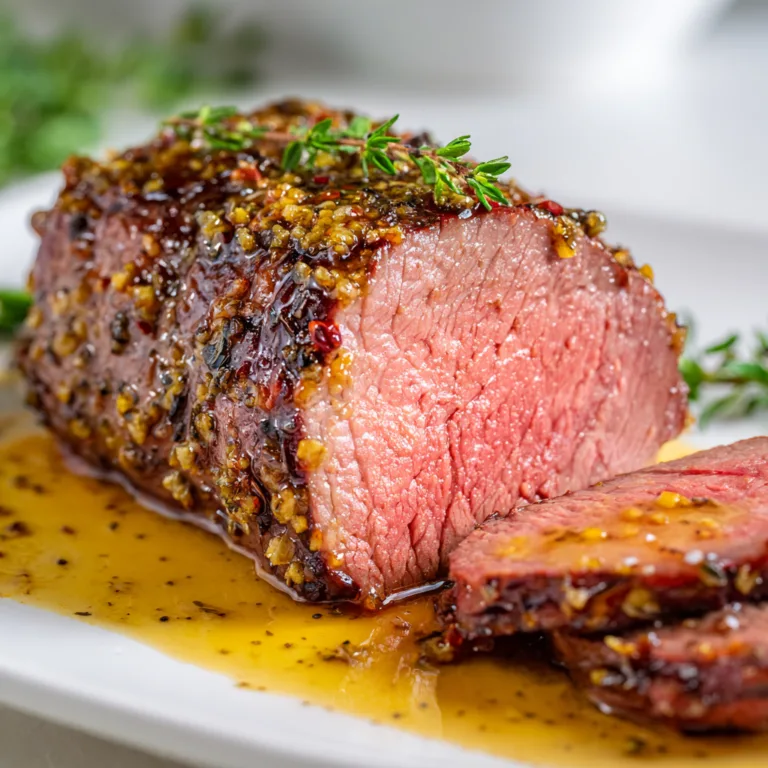
Maple Mustard Beef Tenderloin Recipe
This Maple Mustard Beef Tenderloin is a show-stopping gourmet dish that’s surprisingly simple to prepare. The tenderloin is coated in a sweet and tangy maple-Dijon glaze, roasted to perfection, and ideal for holidays or elegant dinners with minimal fuss.
- Total Time: 35 minutes
- Yield: 6 servings
Ingredients
1 (2 to 2.5 lb) beef tenderloin, trimmed
Salt and freshly ground black pepper, to taste
2 tbsp olive oil
2 tbsp Dijon mustard
2 tbsp whole grain mustard
3 tbsp pure maple syrup
2 cloves garlic, minced
1 tsp fresh rosemary, chopped (or 1/2 tsp dried)
1 tsp balsamic vinegar (optional)
Instructions
1. Preheat oven to 425°F (220°C). Pat tenderloin dry and season generously with salt and pepper.
2. Heat olive oil in an oven-safe skillet or cast iron pan over medium-high heat. Sear beef on all sides until browned (about 2–3 minutes per side).
3. In a small bowl, mix Dijon, whole grain mustard, maple syrup, garlic, rosemary, and balsamic vinegar (if using).
4. Remove pan from heat. Brush maple mustard glaze all over the seared beef.
5. Transfer skillet to oven and roast for 20–25 minutes, or until internal temp reaches 130°F for medium-rare.
6. Remove from oven and tent loosely with foil. Rest for 10 minutes before slicing.
7. Serve with pan juices and garnish with extra rosemary if desired.
Notes
Use a meat thermometer for perfect doneness.
Pairs beautifully with roasted vegetables or garlic mashed potatoes.
Double the glaze and reduce half on the stovetop for a sauce.
- Prep Time: 10 minutes
- Cook Time: 25 minutes
- Category: Dinner
- Method: Roasted
- Cuisine: American
Why You’ll Love This Maple Mustard Beef Tenderloin
Perfect Balance of Flavors
The maple-mustard glaze creates magic when it hits that beautiful beef tenderloin. There’s something about the way the sweetness of real maple syrup plays against the sharp tang of Dijon that makes your taste buds dance. I remember serving this at my sister’s birthday dinner—everyone fell silent for those first few bites, then erupted in a chorus of “mmms.” The glaze caramelizes slightly during cooking, creating this incredible crust that seals in all the juicy tenderness inside. And the aroma? Pure heaven wafting through your kitchen as it roasts to perfection. It’s sophisticated enough for special occasions but simple enough for a weekend treat.
Foolproof Preparation
Even if you’ve never cooked beef tenderloin before, this recipe is surprisingly approachable. The first time I attempted it, I was nervous about overcooking such an expensive cut, but the method is remarkably forgiving. The key is letting the meat come to room temperature before cooking—this ensures even cooking from edge to center. I love that most of the work happens upfront, leaving you free to prepare sides or mingle with guests while it roasts. The maple-mustard mixture creates a protective layer that helps prevent the meat from drying out, giving you a bigger window of doneness. Plus, the impressive presentation belies how little effort it actually takes.
Essential Tips & Tricks
Selecting and Preparing Your Beef
Choosing the right beef is crucial—look for a center-cut tenderloin with good marbling and a deep red color. I learned the hard way that skimping on quality here really does make a difference! Ask your butcher to trim and tie it for you (they’re usually happy to do this). Before cooking, let the beef sit at room temperature for 30-45 minutes—this single step dramatically improves the final result. Pat the surface completely dry with paper towels before applying the maple-mustard mixture; otherwise, it won’t adhere properly. For an extra layer of flavor, consider a light sprinkle of fresh herbs like thyme or rosemary under the glaze. This preparation method works beautifully for garlic butter steak as well.
Perfecting Your Timing
The reverse sear method is my secret weapon for this dish. Start by roasting at a lower temperature (275°F) until the internal temperature reaches 120-125°F for medium-rare. This slow approach gives you more control and evenly cooks the meat from edge to center. Then, remove and rest while you increase the oven temperature to 475°F. The final high-heat blast creates that beautiful caramelized exterior without overcooking the inside. Always use a meat thermometer—visual cues can be misleading with tenderloin. Remember that the temperature will continue rising 5-10 degrees during resting, so pull it slightly before your target doneness. The resting period (at least 15 minutes) is non-negotiable for juicy results!
Serving Ideas & Creative Variations
Elegant Accompaniments
Pair this maple mustard tenderloin with sides that complement its rich flavor profile without overwhelming it. My favorite combination includes creamy mashed potatoes with a touch of horseradish and roasted Brussels sprouts that get slightly crispy at the edges. The slight bitterness of the sprouts cuts through the sweetness of the maple glaze beautifully. For a pop of color and freshness, add a simple arugula salad with lemon vinaigrette and shaved parmesan. If you’re serving wine, a medium-bodied Pinot Noir or Merlot brings out the best in this dish. For a complete feast, consider starting with creamy lemon garlic scallops as an impressive appetizer.
Flavor Twists Worth Trying
While the classic maple-mustard combination is divine, don’t be afraid to introduce seasonal variations. In fall, I love adding a tablespoon of bourbon to the glaze for warmth and complexity. For holiday gatherings, a touch of orange zest and a pinch of cinnamon create a festive twist that always gets compliments. If you prefer a bit of heat, whisk in a teaspoon of chipotle powder—the smoky spice plays wonderfully against the sweet maple. For an herbal approach, add finely chopped rosemary and thyme to the mustard mixture. Leftover tenderloin makes incredible sandwiches the next day—try it thinly sliced on crusty bread with a smear of extra maple-mustard sauce and some peppery arugula.
Storage & Troubleshooting Guide
Proper Storage Methods
Store leftover maple mustard beef tenderloin properly to maintain its luxurious texture. Refrigerate within two hours of cooking, but make sure it’s completely cooled first. I prefer wrapping it tightly in plastic wrap, then placing it in an airtight container—this double protection prevents it from absorbing other flavors in your refrigerator. Properly stored, it will keep for up to four days. For reheating, avoid the microwave which can turn your perfectly cooked meat tough. Instead, slice the cold tenderloin thinly, bring to room temperature, then gently warm the slices in a skillet with a splash of beef broth to maintain moisture.
For longer storage, you can freeze portions for up to three months in freezer-safe bags with the air pressed out.
Common Issues & Solutions
If your maple mustard glaze is sliding off during cooking, the most likely culprit is moisture on the surface of the meat. Next time, thoroughly pat the tenderloin dry and let the mustard layer set for a few minutes before adding the maple syrup. If you’re finding the exterior burns before the center reaches your desired doneness, your oven temperature is likely too high—invest in an oven thermometer for accurate readings. For tenderloin that’s too rare in the center but perfectly cooked outside, try the reverse sear method mentioned earlier.
If your meat seems tough despite cooking to the correct temperature, the culprit might be insufficient resting time—always allow at least 15 minutes tented with foil before slicing against the grain.
Frequently Asked Questions
What’s the ideal internal temperature for maple mustard beef tenderloin?
For medium-rare, aim for 130-135°F after resting. For medium, 140-145°F is perfect. Always use a reliable meat thermometer inserted into the thickest part, and remember that temperature rises 5-10 degrees during resting.
Can I prepare this maple mustard beef tenderloin in advance?
Yes! Apply the maple-mustard mixture up to 24 hours ahead and refrigerate covered. Bring to room temperature before cooking. You can also sear it in advance, then finish in the oven just before serving.
What can I substitute for Dijon mustard?
Whole grain mustard works beautifully for added texture. Stone ground or spicy brown mustard are good alternatives. Avoid yellow mustard as it lacks the complexity needed for this dish.
How much tenderloin should I buy per person?
Plan for 6-8 ounces per person for a main course. A 3-pound tenderloin typically serves 6-8 people. If serving multiple courses, you can reduce to 4-5 ounces per person.
Can I use this same maple-mustard glaze on other meats?
Absolutely! This glaze works wonderfully on pork tenderloin, salmon fillets, or chicken thighs. Adjust cooking times accordingly for different proteins, but the flavor profile remains delicious.
Final Thoughts
This maple mustard beef tenderloin has become one of my signature dishes—the one friends request when they visit and the one that always feels special no matter how many times I make it. There’s something magical about the combination of premium beef, sweet maple, and tangy mustard that creates an experience beyond just dinner. I hope you’ll try it for your next celebration or simply when you want to transform an ordinary evening into something extraordinary. The beauty lies in its simplicity—just a few quality ingredients coming together to create something truly memorable. Don’t forget to check out more of my recipes on Pinterest for more inspiration!