

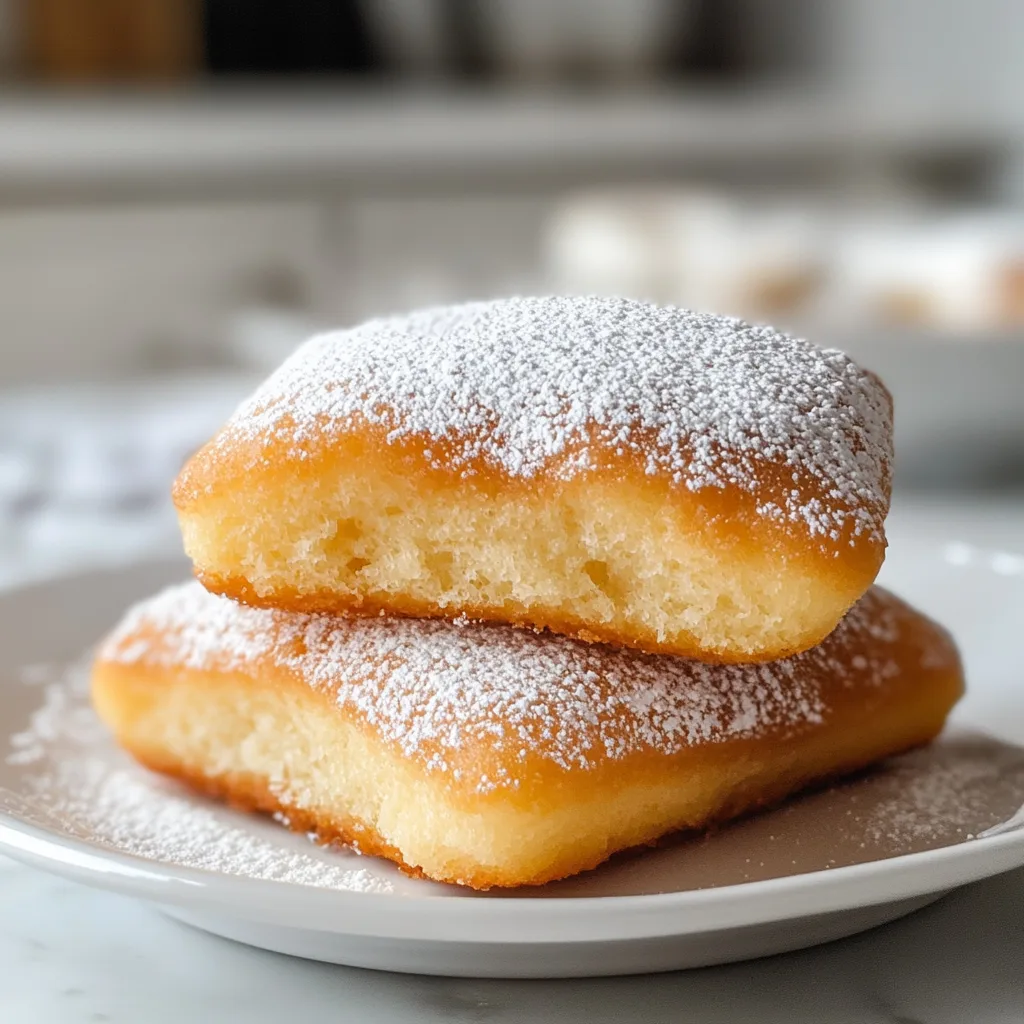
Vanilla French Beignets are little pillows of fried dough heaven that transport me straight to the bustling streets of New Orleans. The first time I bit into one, still warm with a shower of powdered sugar clinging to my lips, I knew I’d found pastry perfection. There’s something magical about the way they puff up in hot oil, creating that distinctive hollow center that makes them lighter than air. Unlike their donut cousins at Mug Meal Magic, beignets have a delicate chew that’s utterly irresistible.
Table of Contents
Recipe
Print
Authentic Vanilla French Beignets Recipe | Classic French Pastry Delight
These Authentic Vanilla French Beignets are light, fluffy, and subtly sweet with a hint of vanilla. Fried until golden and dusted with powdered sugar, they bring the taste of a French bakery straight to your kitchen.
- Total Time: 2 hours 15 minutes (includes rising)
- Yield: 20 beignets
Ingredients
2 1/4 tsp active dry yeast (1 packet)
3/4 cup warm milk (110°F/43°C)
1/4 cup granulated sugar
1 large egg
1 tsp vanilla extract
1/2 tsp salt
3 tbsp unsalted butter, melted
2 1/2 cups all-purpose flour (plus more for dusting)
Vegetable oil, for frying
Powdered sugar, for dusting
Instructions
1. In a bowl, dissolve yeast in warm milk. Let sit 5–10 minutes until foamy.
2. Stir in sugar, egg, vanilla, salt, and melted butter. Mix well.
3. Gradually add flour and knead until a soft dough forms (5–6 minutes by hand or mixer).
4. Place dough in a greased bowl, cover, and let rise in a warm spot for 1–1.5 hours until doubled.
5. Punch down dough and roll out on a floured surface to about 1/4-inch thickness.
6. Cut into 2-inch squares using a knife or pastry cutter.
7. Place cut dough on parchment-lined baking sheet and let rise another 30–45 minutes.
8. Heat oil to 350°F (175°C) in a deep fryer or pot.
9. Fry beignets in batches for 1–2 minutes per side until golden.
10. Drain on paper towels and dust generously with powdered sugar. Serve warm.
Notes
Make sure oil stays at 350°F to ensure even frying.
Beignets are best enjoyed fresh, but can be reheated in a toaster oven for a few minutes.
Add cinnamon to powdered sugar for a spiced version.
- Prep Time: 20 minutes
- Cook Time: 15 minutes
- Category: Dessert, Pastry, Breakfast
- Method: Frying
- Cuisine: French
- Diet: Vegetarian
Why You’ll Love These Vanilla French Beignets
A Taste of New Orleans at Home
There’s something deeply satisfying about recreating iconic treats in your own kitchen. These vanilla-scented squares of fried dough capture the essence of Café du Monde without the plane ticket. The vanilla adds a warm, aromatic quality that elevates them beyond basic beignets. I love watching my guests’ faces light up when I serve these—there’s always that moment of recognition followed by pure joy. The exterior develops a subtle crispness while the inside remains tender and airy, creating that perfect textural contrast that makes beignets so beloved.
Surprisingly Simple to Make
Don’t let their fancy French name fool you—beignets are actually quite approachable to make at home. The dough comes together in minutes, and unlike many yeasted recipes, it’s remarkably forgiving. I’ve made these on busy weekday mornings and for lazy Sunday brunches with equal success. The dough can rest in your refrigerator overnight, which means most of the work can be done ahead of time. All that’s left is a quick fry and a generous dusting of powdered sugar. Even my kitchen-shy friends have mastered these on their first try!
Essential Tips & Tricks
Mastering the Dough
The key to perfect beignets lies in the dough consistency. You want it soft and slightly tacky, but not sticky enough to cling to your fingers. I’ve found that adding the flour gradually gives you better control—you might not need all that the recipe calls for depending on humidity. Don’t rush the resting period; this allows the gluten to relax and the yeast to work its magic. I once tried to speed this up and ended up with dense, chewy squares instead of those light, airy pillows. Temperature matters too—warm your milk to about 110°F, which feels just slightly warm to the touch, similar to the Chocolate Marshmallow Swirl Cookies dough.
Perfecting the Fry
The oil temperature is absolutely crucial when making beignets. Too cool, and they’ll absorb oil and become greasy; too hot, and they’ll brown before cooking through. I aim for 350-360°F and use a thermometer to monitor it constantly. Work in small batches—overcrowding the pot causes the temperature to drop dramatically. I learned this the hard way when I got impatient and dumped in too many at once! Use a spider strainer or slotted spoon to flip them gently, and transfer to paper towels immediately after frying. That instant sugar coating while they’re still warm creates that signature sweet crust that makes beignets so irresistible.
Serving Ideas & Creative Variations
Beyond Powdered Sugar
While traditional beignets are served with a mountain of powdered sugar, there are so many delicious ways to elevate these treats. I love creating a dipping station with options like warm chocolate sauce, dulce de leche, or raspberry coulis. For brunch gatherings, I’ll serve them alongside fresh berries and whipped cream, letting guests build their own beignet sundaes. Sometimes I’ll infuse honey with lavender or orange blossom water for a sophisticated drizzle. These pair beautifully with coffee drinks, especially chicory coffee for authenticity, or even alongside a Creamy Philly Cheesesteak Soup for a unique sweet-savory brunch.
Flavor Infusions
The vanilla in these beignets provides the perfect canvas for creativity. I’ve experimented with adding orange zest to the dough for a citrusy twist, or a touch of cinnamon for warmth. Almond extract pairs beautifully with the vanilla for a more complex flavor profile. For special occasions, I’ll even fold in mini chocolate chips or dried lavender buds into the dough before the final roll-out. My favorite variation involves steeping the milk with earl grey tea before using it in the recipe—the bergamot notes are subtle but transformative. Don’t be afraid to play with different extracts and spices to make these beignets uniquely yours!
Storage & Troubleshooting Guide
Keeping Beignets Fresh
Beignets are definitely at their absolute best when freshly fried, but there are ways to enjoy them beyond that magical first hour. If you have leftovers, store them in an airtight container at room temperature for up to 24 hours. A quick 10-second zap in the microwave wrapped in a paper towel can restore some of their softness. For longer storage, the dough itself freezes beautifully—I often make a double batch, fry half, and freeze the rest of the cut squares on a baking sheet before transferring to a freezer bag. This way, I can have fresh beignets whenever the craving strikes without starting from scratch.
Troubleshooting Common Issues
If your beignets aren’t puffing properly, your oil is likely not hot enough or your dough may be overworked. The gentle touch is key when handling the dough—treat it like you would a delicate cloud. If they’re browning too quickly but staying doughy inside, your oil is too hot. I once had a batch that turned out dense and chewy, which I traced back to expired yeast. Always check that your leavening agents are fresh! If your beignets are absorbing too much oil, make sure you’re maintaining the right temperature and not overcrowding the pot. Remember that the first batch is often the test batch—adjust as needed for beignet perfection.
Frequently Asked Questions
Can I make Vanilla French Beignets ahead of time?
Yes! Prepare the dough up to 24 hours ahead and refrigerate. You can also freeze cut dough squares for up to 3 months. Just thaw overnight in the refrigerator before frying.
How do I know when the oil is the right temperature?
Use a thermometer to maintain 350-360°F. Without one, drop a small piece of dough in—it should bubble immediately and float to the surface within seconds.
Can I bake these instead of frying?
While traditional beignets are fried, you can bake them at 400°F for 10-12 minutes. They’ll be more like soft rolls than authentic beignets, but still delicious.
What’s the difference between beignets and donuts?
Beignets are square-shaped with no hole, made with yeasted dough that creates a distinctive airy interior. Donuts are typically ring-shaped and can be cake or yeast-based.
Why did my Vanilla French Beignets come out dense?
Overmixing the dough, skimping on rise time, or frying at too low a temperature can all cause dense beignets. Handle the dough gently and ensure proper proofing.
Final Thoughts
These Vanilla French Beignets bring a touch of New Orleans magic to your kitchen with surprisingly little effort. The combination of the crisp exterior, pillowy interior, and sweet vanilla aroma creates an irresistible treat that’s perfect for special breakfasts or afternoon indulgences. I find myself returning to this recipe whenever I need a bit of comfort or want to impress guests with something uniquely delightful. Share your beignet creations on Pinterest and tag me—I’d love to see your powdered sugar masterpieces!