

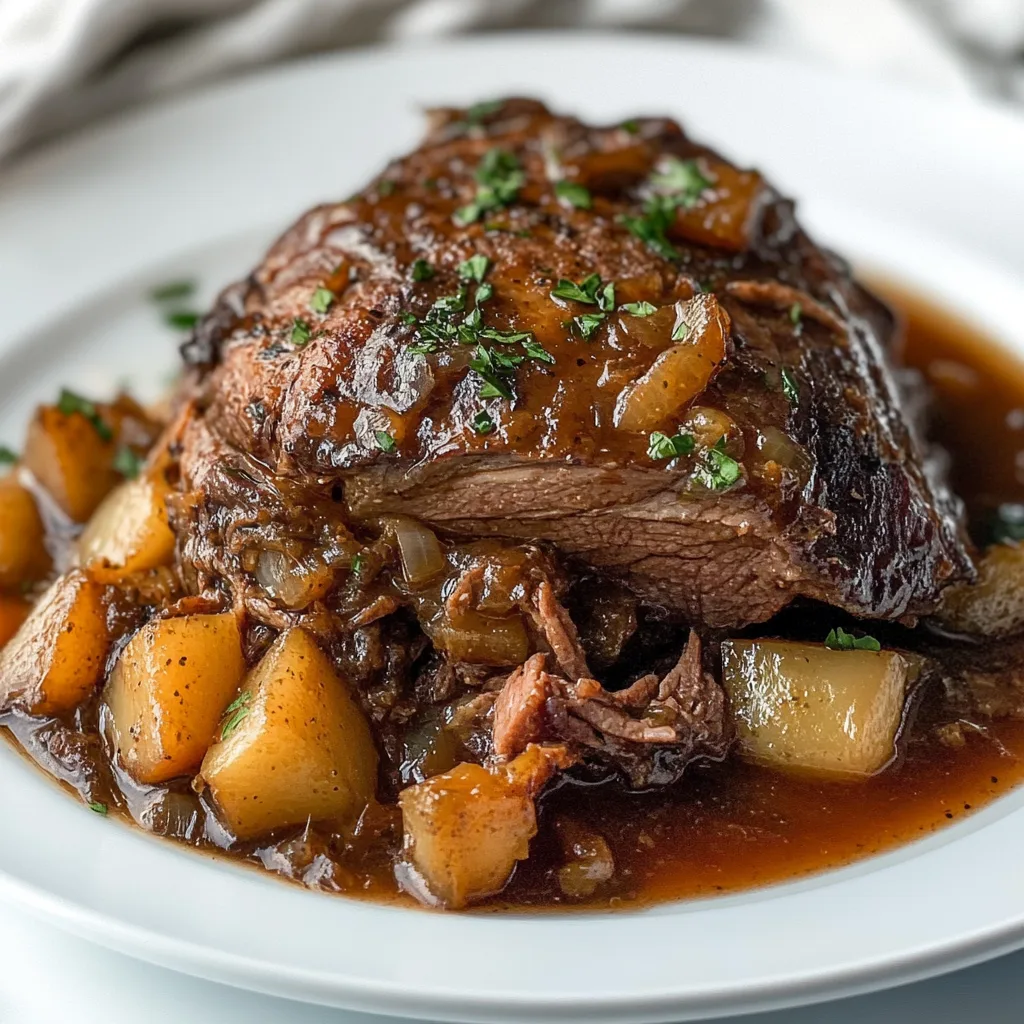
Apple Cider Braised Beef Shoulder transforms your kitchen into a haven of fall aromas that wrap around you like a warm blanket. I discovered this recipe during a rainy October weekend when my in-laws were visiting, and the slow-cooked tender beef falling apart at the touch of a fork had everyone closing their eyes with each bite. The rich apple cider reduction creates a sauce that’s sweet, tangy, and impossibly deep with flavor—perfect for those nights when comfort food is calling your name. This dish has become my cold-weather signature at Mug Meal Magic, and I’m thrilled to share it with you today.
Table of Contents
Recipe
Print
Tender Apple Cider Braised Beef Shoulder Recipe | Easy Slow-Cooked Beef
This Apple Cider Braised Beef Shoulder is fall-apart tender, infused with the sweet and savory flavors of apple cider, garlic, and fresh herbs. It’s a simple, slow-cooked dish that delivers comfort and elegance in every bite.
- Total Time: 3 hours 45 minutes
- Yield: 6 servings
Ingredients
3 lbs beef shoulder roast (or chuck roast)
1 tbsp olive oil
Salt and black pepper to taste
1 large onion, sliced
3 cloves garlic, minced
2 cups apple cider (not apple juice)
1 tbsp Dijon mustard
1 tbsp apple cider vinegar
1 tsp dried thyme or 3 sprigs fresh thyme
1 tsp rosemary (optional)
2 bay leaves
1 tbsp cornstarch + 2 tbsp water (for slurry, optional)
Instructions
1. Pat beef dry and season generously with salt and pepper.
2. Heat olive oil in a large Dutch oven over medium-high heat.
3. Sear beef on all sides until browned, about 4–5 minutes per side. Remove and set aside.
4. Add sliced onions to the pot. Sauté for 4 minutes until golden. Add garlic and cook 1 more minute.
5. Deglaze pan with a splash of cider, scraping up browned bits.
6. Stir in the rest of the cider, Dijon mustard, vinegar, thyme, rosemary (if using), and bay leaves.
7. Return beef to the pot. Bring to a simmer.
8. Cover and braise in a 325°F (160°C) oven for 3–3.5 hours, or until beef is fork-tender.
9. Remove beef and set aside. Optional: simmer braising liquid and stir in cornstarch slurry to thicken sauce.
10. Slice or shred beef and serve with gravy over mashed potatoes or roasted vegetables.
Notes
Use bone-in beef shoulder for extra flavor if available.
Make it ahead! Flavors deepen overnight and leftovers reheat beautifully.
Pairs wonderfully with buttery mashed potatoes or creamy polenta.
- Prep Time: 15 minutes
- Cook Time: 3 hours 30 minutes
- Category: Dinner, Beef, Holiday
- Method: Braising
- Cuisine: American
Why You’ll Love This Apple Cider Braised Beef Shoulder
Fall-Apart Tenderness With Minimal Effort
This recipe is a beautiful example of how low, slow cooking transforms even tougher cuts of meat into something extraordinary. The beef shoulder (sometimes called chuck roast) contains wonderful marbling that melts during the braising process, creating meat so tender you barely need a knife. I love how the collagen-rich cut breaks down over those hours in the oven, basting itself in its own juices while absorbing the sweet-tart notes from the cider. My husband Tom always says this dish gives him “restaurant feels” without the restaurant prices—which is exactly what I’m going for when I make it on chilly Sunday afternoons with football playing in the background.
Complex Flavors That Develop Effortlessly
The magic of this recipe lies in how the apple cider caramelizes around the edges of the beef, creating a gorgeous sticky glaze that concentrates in flavor as it cooks. Fresh herbs like rosemary and thyme infuse the meat with earthy aromatics, while the natural sweetness from the cider balances the savory elements perfectly. What I adore most is how the onions melt into the sauce, becoming almost jam-like by the end of cooking. The first time I made this, my kitchen smelled so incredible that my neighbor actually texted to ask what I was cooking! That’s when you know you’ve hit culinary gold—when the aroma alone makes people want to pull up a chair at your table.
Essential Tips & Tricks
Choosing and Preparing Your Beef
Selecting the right cut is crucial for this recipe. Look for a well-marbled beef shoulder with good fat distribution—this is what delivers that melt-in-your-mouth texture we’re after. I always let my meat come to room temperature for about 30 minutes before searing, which helps it brown more evenly. The initial sear is non-negotiable! Those first 4-5 minutes per side create a caramelized crust that seals in juices and adds incredible depth to your final dish. One mistake I made early on was overcrowding the pan—now I work in batches if needed, giving each piece of meat plenty of space to develop that gorgeous brown crust that forms the flavor foundation of the entire dish.
Perfecting Your Braising Liquid
The braising liquid is where all the magic happens in this recipe. I recommend using high-quality apple cider (not apple juice) for its more complex, less-sweet profile. For an extra layer of flavor, try reducing about a cup of the cider by half before adding it to the pot—this concentrates the apple essence and creates a more intense base. Don’t skip deglazing the pan with a splash of apple cider vinegar after searing; those browned bits (fond) contain tremendous flavor.
I learned from experience that adding too much liquid can dilute the final sauce, so stick to just enough to come halfway up the sides of the meat. This ensures the top portion roasts while the bottom braises—giving you the best of both cooking methods.
Serving Ideas & Creative Variations
Perfect Pairings for Your Braised Beef
This apple cider braised beef shoulder practically begs to be served over something that can soak up its glorious sauce. Creamy mashed potatoes make an ideal base—I like to add a touch of horseradish to mine for a gentle heat that complements the sweet cider notes. Buttered egg noodles or soft polenta also work beautifully. For vegetables, I lean toward those with a slight bitterness to balance the richness: roasted Brussels sprouts, sautéed kale with garlic, or a simple arugula salad dressed with lemon. When serving for company, I often pair this with my Crispy Bacon Honey Roasted Potatoes for an extra-special touch. Don’t forget crusty bread for sauce-sopping—it’s practically mandatory!
Seasonal and Dietary Adaptations
This recipe welcomes creative adaptations throughout the year. In autumn, try adding diced butternut squash or sweet potatoes to the pot during the last hour of cooking—they’ll absorb the braising liquid and become irresistibly flavorful. For a summer version, brighten things up with fresh herbs like basil and thyme added just before serving. If you’re watching carbs, serve the beef over cauliflower mash or roasted cabbage steaks. For those avoiding alcohol, replace the optional splash of bourbon with more stock and a tablespoon of maple syrup. My gluten-free friends appreciate that this dish needs no modification—it’s naturally gluten-free as long as you verify your stock ingredients. The versatility makes this recipe a year-round favorite in my kitchen.
Storage & Troubleshooting Guide
Maximizing Leftovers
One of the best things about this apple cider braised beef shoulder is that it actually improves with time. Store leftovers in an airtight container in the refrigerator for up to 4 days—the flavors will continue to develop and meld together beautifully. For freezing, I portion the meat and sauce separately in freezer-safe containers, where they’ll keep for up to 3 months.
My favorite way to repurpose leftovers is in warm sandwiches on toasted ciabatta with melted provolone and caramelized onions. The meat also shines in breakfast hash with crispy potatoes and a fried egg on top. For quick weeknight dinners, I sometimes shred the leftover beef and toss it with pasta, adding a splash of cream and the reduced sauce for an instant gourmet meal.
Solving Common Braising Challenges
If your beef isn’t as tender as you’d hoped, the most likely culprit is insufficient cooking time. Different cuts and sizes require different braising durations—don’t be afraid to add another 30-60 minutes if needed. The meat should practically fall apart when gently prodded with a fork. For a sauce that’s too thin, remove the meat when done, then simmer the liquid uncovered until it reduces to your desired consistency. Conversely, if your sauce reduces too much during cooking, simply add a splash more cider or stock.
I once saved an overly-reduced sauce by whisking in a tablespoon of cold butter at the end—it added silkiness and mellowed out the concentrated flavors. Remember that braising is forgiving; most issues can be easily corrected with minor adjustments.
Frequently Asked Questions
Can I make Apple Cider Braised Beef Shoulder in a slow cooker?
Absolutely! Sear the meat first, then transfer everything to your slow cooker. Cook on low for 8-10 hours or high for 5-6 hours until fork-tender. You may need to reduce the sauce on the stovetop afterward.
What’s the best cut of beef to use for this recipe?
Beef shoulder (chuck roast) is ideal because of its marbling and connective tissue, which break down during long cooking. Brisket or short ribs also work beautifully as alternatives.
Can I use apple juice instead of apple cider?
While possible, apple juice is significantly sweeter and lacks the complexity of cider. If substituting, add a tablespoon of apple cider vinegar to balance the sweetness.
How do I know when the beef is properly done?
The meat should easily pull apart with minimal resistance when tested with a fork. If it’s still tough, continue cooking—even 30 minutes more can make a significant difference.
Can this dish be prepared ahead for entertaining?
This is an excellent make-ahead dish! Prepare it 1-2 days before serving, refrigerate, then gently reheat in a 325°F oven for about 30 minutes before serving.
Final Thoughts
There’s something deeply satisfying about transforming a humble cut of meat into something extraordinary through the simple magic of time and good ingredients. This Apple Cider Braised Beef Shoulder embodies everything I love about cool-weather cooking—the way it fills your home with mouthwatering aromas, brings people together around the table, and provides that bone-deep comfort we all crave. I hope this recipe becomes a favorite in your home as it has in mine. For more seasonal inspiration, visit my Pinterest collection where I’m always adding new comfort food ideas to get us through the chillier months ahead.