


Beef jerky has always been my secret weapon for those days when I need a protein-packed snack that actually satisfies. There’s something magical about the chewy texture and concentrated flavor that makes homemade jerky infinitely better than store-bought. I discovered this perfect jerky technique years ago during a camping trip when a friend pulled out a bag of homemade goodness that changed everything. Today, I’m sharing my foolproof method for creating beef jerky that’s tender, flavorful, and completely customizable to your taste preferences.
Recipe
Print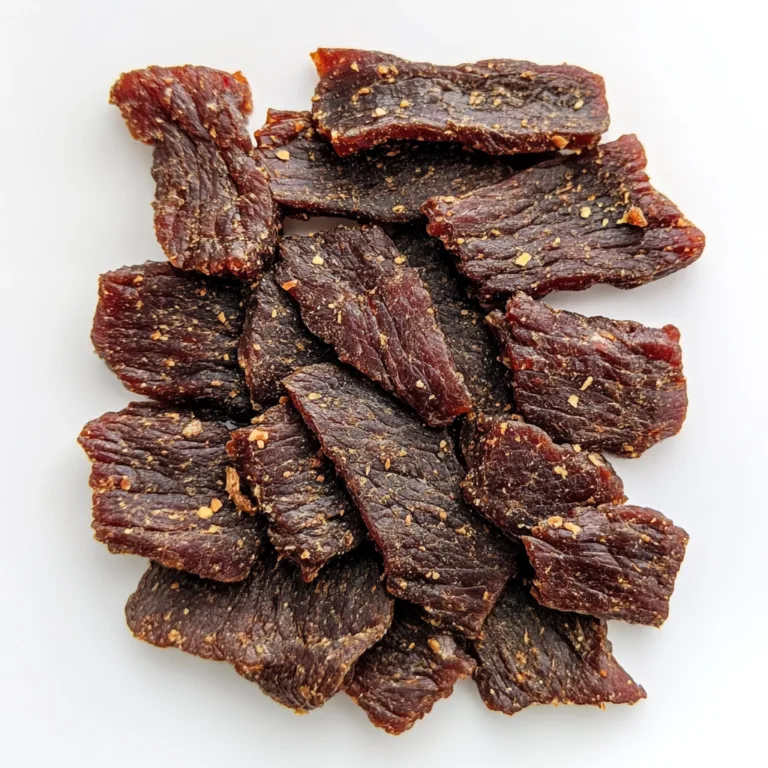
Premium Beef Jerky | High-Protein, All-Natural Snack
This Homemade Beef Jerky is savory, smoky, and packed with flavor—made right in your oven or dehydrator. Perfect for clean snacking, high-protein diets, and DIY foodies.
- Total Time: 4 hours 15 minutes
- Yield: 10 servings
Ingredients
1.5–2 lbs lean beef (top round, flank, or sirloin), sliced thin against the grain
1/4 cup low-sodium soy sauce
2 tbsp Worcestershire sauce
1 tbsp brown sugar or honey
1 tsp smoked paprika
1 tsp onion powder
1 tsp garlic powder
1/2 tsp black pepper
1/2 tsp red pepper flakes (optional, for heat)
Instructions
1. Slice beef into 1/8–1/4 inch thin strips against the grain (partially freezing the meat helps).
2. In a large bowl or zip-top bag, mix soy sauce, Worcestershire, sugar, and spices to create marinade.
3. Add beef to marinade, toss to coat, and refrigerate for at least 6 hours or overnight.
4. Preheat oven to 175°F (or use a dehydrator). Line baking sheets with wire racks.
5. Lay beef strips in a single layer on racks. Pat dry with paper towels to remove excess marinade.
6. Bake for 3–4 hours, flipping halfway, until dried but still slightly pliable.
7. Cool completely. Store in airtight container for up to 1 week, or refrigerate for longer.
Notes
• Use very lean cuts to prevent spoilage.
• For extra smoky flavor, add 1/2 tsp liquid smoke.
• Jerky is ready when it’s dry to the touch but still slightly bendable.
- Prep Time: 15 minutes (plus marinating time)
- Cook Time: 4 hours
- Category: Snack
- Method: Oven or Dehydrator
- Cuisine: American
Why You’ll Love This Beef Jerky
Perfect Texture Every Time
The key to incredible beef jerky lies in finding that sweet spot between too tough and too soft. I’ve learned through countless batches that slicing your meat against the grain at a consistent 1/8-inch thickness makes all the difference. Eye of round roast is my go-to cut because it’s lean and produces beautifully uniform pieces. The marinade time matters too—at least 12 hours gives the flavors time to penetrate deeply, but I’ve found my personal sweet spot is around 18 hours for that perfect balance of flavor without overwhelming the natural beefiness.
Cost-Effective & Healthier Alternative
Making your own beef jerky saves serious money. A pound of quality store-bought jerky can cost upwards of $25, while homemade versions come in around $8-10 per pound. Plus, you control exactly what goes into it—no mysterious preservatives or additives. I still remember my shock at reading the label on my favorite commercial brand and finding corn syrup as the second ingredient! With homemade jerky, you can adjust sodium levels, eliminate sugar completely if desired, and create clean protein that actually supports your nutrition goals rather than undermining them.
Essential Tips & Tricks
Choosing & Preparing the Meat
The foundation of exceptional beef jerky starts with selecting the right cut. Look for lean cuts like eye of round, top round, or bottom round with minimal marbling. Fat is the enemy of jerky as it spoils quickly and creates an unpleasant texture. Before slicing, partially freeze your meat for about 2 hours—this game-changing trick makes it firm enough to cut into thin, consistent slices. I learned this the hard way after struggling with uneven pieces that dried unevenly. For easiest slicing, ask your butcher to trim excess fat and slice with the grain if you plan to cut against it at home.
Drying Methods That Work
You don’t need fancy equipment to make great jerky. While a dedicated dehydrator produces the most consistent results, your regular oven works perfectly with a simple hack: prop the door open slightly with a wooden spoon to allow moisture to escape. The ideal temperature range is 160-175°F. Too hot and you’ll cook rather than dehydrate the meat; too cool and you risk bacterial growth. Arrange your marinated strips on wire racks without touching, and rotate the trays halfway through. My personal timing sweet spot is 4 hours, but you’ll want to start checking at 3 hours for thinner slices.
Serving Ideas & Creative Variations
Beyond Basic Snacking
Beef jerky transcends simple snacking when you incorporate it creatively into meals. Try chopping it finely to add a savory protein boost to morning scrambled eggs or sprinkle it over baked potato soup for an unexpected texture contrast. One of my favorite weeknight shortcuts is adding torn pieces to ramen for instant umami depth. When hosting game days, I serve a jerky board with various flavors alongside sharp cheeses, pickled vegetables, and whole grain mustard—it always disappears first! For hiking trips, I mix jerky pieces with nuts, dried berries, and dark chocolate chunks for trail mix that keeps energy levels steady.
Flavor Profiles to Explore
The marinade is where you can truly make beef jerky your own. Beyond classic combinations, consider unexpected flavor pairings like coffee-rubbed jerky using finely ground espresso beans, brown sugar, and chipotle powder. My recent obsession is a Korean-inspired version with gochujang, pear juice, and toasted sesame oil that delivers sweet heat with incredible depth. For something completely different, try a Mediterranean profile with lemon zest, oregano, olive oil, and a touch of honey. The acidic brightness creates a refreshing counterpoint to the rich beef. Don’t forget liquid smoke—just a few drops transforms indoor-dried jerky into something that tastes authentically smoked.
Storage & Troubleshooting Guide
Maximizing Shelf Life
Proper storage dramatically extends your beef jerky’s lifespan. Once completely cooled, place it in airtight containers with oxygen absorber packets if you have them. Glass jars with tight seals work beautifully, as do vacuum-sealed bags for maximum freshness. At room temperature in an airtight container, homemade jerky typically lasts 1-2 weeks. Refrigeration extends this to about a month, while freezing preserves quality for up to 6 months. I divide my batches into weekly portions—some for immediate enjoyment, some refrigerated, and the rest frozen. This system ensures I always have perfectly preserved jerky without waste.
Fixing Common Problems
Even experienced jerky makers encounter challenges. If your finished product is too tough, you likely over-dried it or sliced it too thin. For your next batch, reduce drying time by 30-minute increments or slice slightly thicker. Conversely, under-dried jerky feels too moist and won’t snap slightly when bent—this requires additional drying time and poses potential food safety issues. If mold appears (white fuzzy spots), unfortunately the entire batch must be discarded. Prevention is key: ensure complete drying, proper cooling before storage, and absolutely clean hands and equipment during preparation. Remember that properly dried jerky should bend and crack, but not break completely.
Frequently Asked Questions
What’s the best cut of beef for making jerky?
Eye of round is ideal because it’s lean, reasonably priced, and has minimal connective tissue. Top round and bottom round are excellent alternatives with similar characteristics.
How do I know when my beef jerky is properly dried?
Properly dried jerky should be firm and slightly bendable without being brittle. It should crack slightly when bent but not snap completely, with no visible moisture when pressed.
Can I make beef jerky without a dehydrator?
Absolutely! Your regular oven works well set between 160-175°F with the door propped slightly open to allow moisture escape. Wire racks over baking sheets ensure even air circulation.
How long does homemade beef jerky last?
When stored in airtight containers, homemade beef jerky typically lasts 1-2 weeks at room temperature, up to 1 month refrigerated, and 6 months when frozen.
Is making beef jerky at home worth the effort?
Yes! Homemade beef jerky costs significantly less than store-bought, contains no preservatives, and can be customized to your exact flavor preferences and dietary needs.
Final Thoughts
Making beef jerky at home has become one of my favorite weekend projects—a few hours of prep yields weeks of delicious, protein-rich snacking. The process connects me to traditional food preservation methods while allowing endless creative experimentation. I encourage you to start with a basic recipe, then gradually incorporate your own flavor twists. Your first batch might not be perfect, but the journey to mastering homemade beef jerky is incredibly rewarding. For more inspiration, check out my Pinterest board dedicated to jerky variations from around the world.