

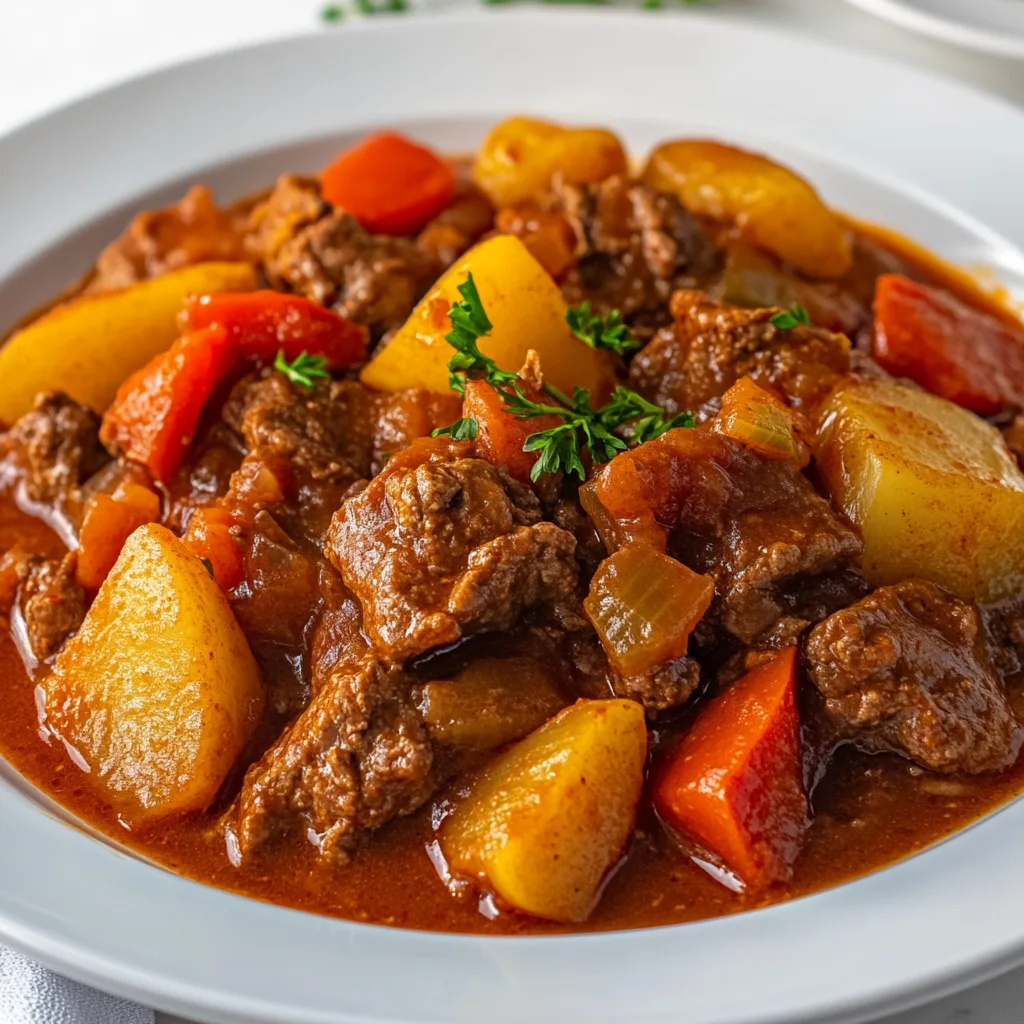
German Goulash recipes transport me back to my grandmother’s kitchen, where the rich aroma of paprika-infused beef would fill the air on chilly evenings. This hearty, soul-warming dish combines tender chunks of beef, aromatic vegetables, and a velvety sauce that’s simply made for sopping up with crusty bread or fluffy dumplings. Unlike its Hungarian cousin, German Goulash tends to be less spicy but equally complex in flavor, often featuring a touch of caraway and sometimes a splash of beer for depth. I’ve spent years perfecting my own version, and I’m thrilled to share these authentic techniques with you today.
Table of Contents
Recipe

Authentic German Goulash Recipes | Traditional & Easy Gulasch Ideas
This traditional German goulash is made with tender beef, sweet onions, and a richly seasoned paprika-tomato sauce. A true comfort dish that gets even better the next day.
- Total Time: 2 hours 15 minutes
- Yield: 6 servings
Ingredients
2 tbsp oil or butter
2 lbs beef chuck, cut into 1-inch cubes
2 large onions, sliced
2 garlic cloves, minced
2 tbsp tomato paste
2 tsp sweet paprika
1 tsp hot paprika (optional)
1/2 tsp caraway seeds (optional)
1/2 tsp marjoram
1/2 tsp black pepper
1 tsp salt (or to taste)
1/2 cup red wine (or beef broth)
1 1/2 cups beef broth
1 bay leaf
1 tbsp flour (optional, for thickening)
Instructions
1. In a large heavy pot, heat oil over medium-high heat. Brown beef in batches and set aside.
2. Add sliced onions to the pot and sauté until golden and soft, about 10–12 minutes.
3. Add garlic and tomato paste. Cook 2 minutes.
4. Stir in paprika, marjoram, caraway, salt, and pepper. Mix well.
5. Deglaze with red wine (or broth), scraping up brown bits. Simmer 2 minutes.
6. Return beef to pot. Add beef broth and bay leaf. Bring to a low simmer.
7. Cover and cook over low heat for 1.5 to 2 hours, or until beef is fork-tender.
8. Optional: Stir in flour slurry (1 tbsp flour + 2 tbsp water) for thicker sauce. Simmer 5 more minutes.
9. Serve hot over egg noodles, spaetzle, mashed potatoes, or crusty bread.
Notes
Use sweet Hungarian paprika for traditional flavor.
The goulash tastes even better the next day after resting.
Add a touch of sour cream when serving for a creamy twist.
- Prep Time: 15 minutes
- Cook Time: 2 hours
- Category: Dinner, Stew, Traditional
- Method: Stovetop Simmer
- Cuisine: German
Why You’ll Love These German Goulash Recipes
Perfect Comfort Food for Any Season
There’s something magical about a pot of German Goulash simmering on the stove that makes your entire home feel like a sanctuary. The deep, rich flavors develop slowly, transforming simple ingredients into something extraordinary. On winter evenings, a steaming bowl warms you from the inside out, while in cooler months, it satisfies that craving for something substantial without feeling heavy. I remember making this for friends during an unexpected spring snowstorm—they still talk about how that goulash saved the day! The best part? It tastes even better the next day, making it perfect for meal prep and busy weeknights.
Versatile and Economical
One of the things I adore about German Goulash recipes is their incredible versatility. You can use budget-friendly cuts of beef like chuck or round, which become meltingly tender during the slow cooking process. I’ve made this dish for elegant dinner parties and casual family meals alike—it always impresses. The basic recipe welcomes adaptations based on what you have on hand: no red wine? Use beef stock with a splash of vinegar. No fresh herbs? Dried work beautifully. And the leftovers transform magically—try serving day-old goulash over baked potatoes or stirring it into pasta for an entirely new meal.
Essential Tips & Tricks
The Secret to Tender Meat
The foundation of exceptional German Goulash begins with properly prepared meat. I learned through much trial and error that patience is crucial here. Start by patting your beef cubes completely dry before browning—moisture is the enemy of that beautiful caramelization we’re seeking. Work in small batches (I never crowd more than a single layer in my Dutch oven) and resist the urge to stir constantly. That golden-brown crust equals flavor! Another game-changing technique: dust your meat lightly with flour after browning but before adding liquids. This creates a silky texture in the final sauce without needing to add a separate thickener later.
Layering Flavors for Depth
The difference between good goulash and exceptional goulash lies in how you build flavors. I start with slow-caramelized onions—cooking them until they’re deeply golden takes time but creates an incredible foundation. When adding paprika (the heart of any goulash), I briefly bloom it in the fat for 30 seconds before adding liquids, which awakens its oils without burning. Another trick? Add a tablespoon of tomato paste and let it brown slightly before deglazing. This concentrates the flavor beautifully. For an authentic German touch, try adding a splash of dark beer along with your stock—the malty notes create remarkable complexity.
Serving Ideas & Creative Variations
Traditional Accompaniments
In Germany, goulash is typically served with hearty sides that complement its rich sauce. Spätzle (small egg noodles) might be my favorite pairing—their slightly chewy texture and ability to catch the sauce make them perfect partners. Traditional potato dumplings (Kartoffelklöße) are another authentic choice, their pillowy centers soaking up the flavorful gravy. For a simpler option, buttered egg noodles work beautifully. Don’t forget the classic garnishes: a dollop of sour cream, a sprinkle of fresh parsley, and perhaps some pickled vegetables on the side to cut through the richness. I love serving mine with a simple cucumber salad dressed with dill and vinegar.
Regional German Variations
Each region in Germany puts its own spin on goulash, offering exciting ways to experiment. In northern Germany, you’ll find Jägergoulash (hunter’s goulash), which incorporates mushrooms and sometimes juniper berries for an earthy, forest-inspired flavor. Bavarian versions might include a touch of sweetness from a grated apple or a spoonful of lingonberry preserves. For something different, try Berlin-style goulash, which often includes bell peppers and sometimes a hint of cinnamon for warmth. My personal twist includes a splash of balsamic vinegar added at the very end—it brightens all the flavors and adds beautiful dimension without overwhelming the dish.
Storage & Troubleshooting Guide
Proper Storage Methods
German Goulash actually improves with time, making it an excellent make-ahead dish. For maximum flavor development, cool it completely before refrigerating in an airtight container—this allows the flavors to meld beautifully. It keeps perfectly for 3-4 days in the refrigerator. For longer storage, goulash freezes exceptionally well for up to 3 months. I portion mine in freezer-safe containers for easy single servings. One tip I’ve learned: freeze it without potatoes or dumplings, as they can become mealy upon thawing. When reheating, do so gently over low heat with a splash of broth to maintain the sauce’s silky texture.
Fixing Common Issues
Even experienced cooks occasionally encounter challenges with goulash. If your sauce is too thin, try this quick fix: remove about ¼ cup of the liquid, whisk in 1 tablespoon of cornstarch until smooth, then stir this slurry back into the pot and simmer for 5 minutes. Conversely, if your sauce has reduced too much, simply add more beef stock or even a splash of red wine. Meat still tough after cooking? Your heat was likely too high—goulash needs a gentle simmer to allow the collagen to break down properly. For goulash that tastes flat, try adding a teaspoon of red wine vinegar or a squeeze of lemon juice—acidity brightens all the flavors beautifully.
Frequently Asked Questions
What’s the difference between Hungarian and German Goulash?
Hungarian goulash is typically soupier with more paprika and often contains potatoes cooked in the broth. German goulash is thicker, less spicy, sometimes includes beer, and is usually served over starches rather than cooking them in the stew.
Can I make German Goulash in a slow cooker?
Absolutely! Brown the meat and sauté the vegetables first, then transfer everything to your slow cooker. Cook on low for 7-8 hours or high for 4-5 hours until the meat is fork-tender.
What’s the best cut of beef for German Goulash recipes?
Chuck roast is ideal—it has enough fat and connective tissue to become tender during slow cooking. Beef shoulder, round, or brisket also work well. Avoid lean cuts like sirloin which can become tough.
Can I make this dish ahead for a party?
Definitely! German Goulash actually improves after a day in the refrigerator as the flavors meld. Simply reheat gently before serving, adding a splash of broth if needed.
Is paprika essential for authentic German Goulash?
Yes, paprika is non-negotiable in authentic German Goulash recipes. Use high-quality Hungarian sweet paprika for the best flavor, adding a small amount of hot paprika if you enjoy some heat.
Final Thoughts
Mastering German Goulash recipes has been one of my most rewarding culinary journeys. This dish proves that patience and simple techniques can transform humble ingredients into something truly extraordinary. I hope these tips inspire you to create your own version, adapting it to your family’s preferences while honoring its rich heritage. There’s something deeply satisfying about carrying forward these traditional cooking methods, creating meals that nourish both body and soul. For more inspiration, check out my collection on Pinterest, where I share more German comfort food favorites.