

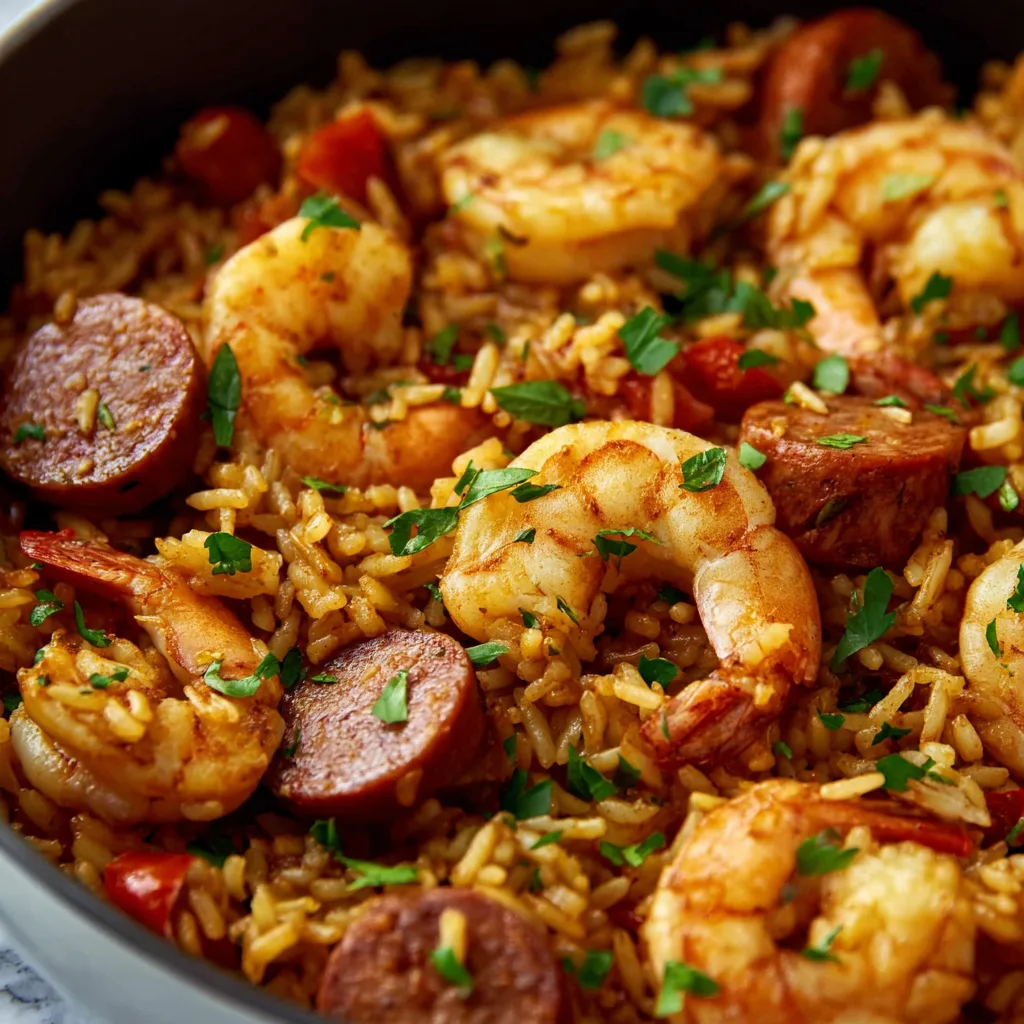
One Pot Shrimp and Sausage Jambalaya is my absolute go-to when I want to bring a taste of New Orleans into my kitchen without creating a mountain of dishes. The first time I made this dish, the aroma of sautéing onions, bell peppers, and Cajun spices transformed my apartment into a French Quarter bistro. There’s something magical about watching rice absorb all those savory flavors while plump shrimp and smoky sausage create the perfect protein duo. If you’re craving comfort food with a spicy kick, this jambalaya recipe will become your new favorite.
Recipe
Print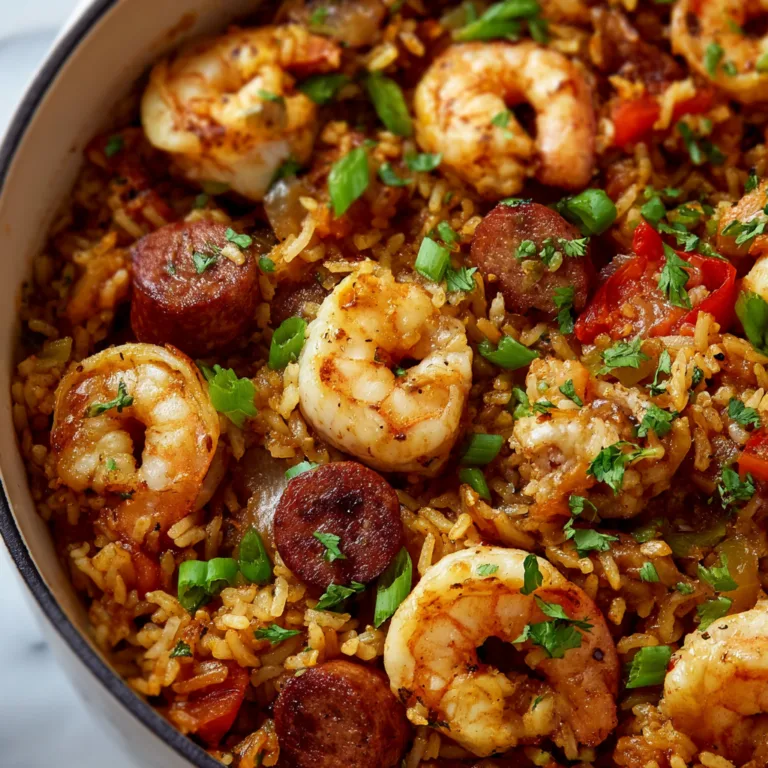
One Pot Shrimp and Sausage Jambalaya Recipe
This One Pot Shrimp and Sausage Jambalaya is bold, hearty, and packed with Cajun flavor. Juicy shrimp, smoky sausage, rice, and vegetables simmer together in one pot for an easy and satisfying Southern dinner.
- Total Time: 45 minutes
- Yield: 6 servings
Ingredients
1 tablespoon olive oil
12 ounces andouille sausage, sliced
1 pound large shrimp, peeled and deveined
1 small onion, diced
1 green bell pepper, diced
2 celery stalks, diced
3 cloves garlic, minced
1 (14.5 ounce) can diced tomatoes
1 cup long grain white rice
2 cups chicken broth
1 teaspoon Cajun seasoning
1/2 teaspoon smoked paprika
1/4 teaspoon dried thyme
1/4 teaspoon cayenne pepper (optional)
Salt and black pepper to taste
2 green onions, sliced for garnish
Fresh parsley for garnish
Instructions
1. Heat olive oil in a large pot over medium heat.
2. Add sliced sausage and cook until browned. Remove and set aside.
3. In the same pot, add onion, bell pepper, and celery. Cook for 4–5 minutes until softened.
4. Stir in garlic and cook for 30 seconds until fragrant.
5. Add diced tomatoes, rice, chicken broth, Cajun seasoning, smoked paprika, thyme, cayenne, salt, and pepper.
6. Stir well and bring to a simmer.
7. Cover and cook for 18–20 minutes until rice is tender and liquid is absorbed.
8. Return sausage to the pot and stir.
9. Add shrimp on top and cover. Cook for 4–5 minutes until shrimp turn pink and opaque.
10. Gently stir everything together.
11. Garnish with sliced green onions and fresh parsley before serving.
Notes
Use raw shrimp for best texture.
Do not overcook shrimp to keep them tender.
Adjust Cajun seasoning for preferred spice level.
Store leftovers refrigerated up to 4 days.
- Prep Time: 15 minutes
- Cook Time: 30 minutes
- Category: Dinner
- Method: Stovetop
- Cuisine: Cajun
Why You’ll Love This One Pot Shrimp and Sausage Jambalaya
Perfect Balance of Flavors and Textures
The beauty of jambalaya lies in its harmonious blend of ingredients. The andouille sausage brings a smoky depth that complements the sweetness of shrimp perfectly. I love how the trinity of onions, celery, and bell peppers creates a fragrant base, while tomatoes add a subtle acidity that balances the richness. The rice soaks up all these flavors, becoming infused with the essence of each ingredient. What makes this dish truly special is how the textures play together—tender shrimp, chewy sausage, and fluffy rice in every bite. It’s comfort food that feels both familiar and exciting.
True One-Pot Convenience
On busy weeknights, the last thing I want is to juggle multiple pots and pans. This jambalaya truly delivers on the one-pot promise. Everything cooks in a single Dutch oven or deep skillet, building layers of flavor as you go. I still remember the first time I made this for friends—I spent the evening actually enjoying their company instead of frantically washing dishes between courses. The cleanup is minimal, but the flavor is maximal. You’ll appreciate how the cooking process is streamlined without sacrificing any of the authentic taste that makes jambalaya so beloved.
Essential Tips & Tricks
Mastering the Rice-to-Liquid Ratio
Getting the perfect rice consistency in jambalaya can make or break your dish. I learned the hard way that different rice varieties absorb liquid differently. For long-grain white rice, stick to a 1:2 rice-to-liquid ratio. If you’re using brown rice, you’ll need a bit more liquid and longer cooking time. My secret tip? Add the liquid gradually and keep an eye on absorption—jambalaya should be moist but not soupy. If the rice is still firm but the liquid is gone, add a splash more broth and continue cooking with the lid on. The steam will help finish cooking the rice without making the dish watery or mushy like some rice dishes can become.
Timing Your Seafood Addition
The most common mistake I see in jambalaya recipes is adding the shrimp too early. Shrimp cook incredibly quickly—about 2-3 minutes is all they need—and overcooked shrimp become rubbery and disappointing. My foolproof method is to add the shrimp during the last 5 minutes of cooking time. They’ll turn pink and opaque just as the rice finishes. For extra insurance, I turn off the heat while the shrimp are still slightly translucent and let the residual heat finish the job. The gentle cooking preserves their delicate texture and sweet flavor, making every bite perfect.
Serving Ideas & Creative Variations
Complementary Side Dishes
While jambalaya is certainly hearty enough to stand alone, I love serving it with a few simple sides that enhance the meal. A crisp green salad with a light vinaigrette provides a refreshing contrast to the rich, spicy main dish. Crusty French bread is non-negotiable in my house—it’s perfect for sopping up every last bit of the flavorful sauce. For a true New Orleans experience, try serving with simple garlic bread or cornbread. These sides complement without competing with the bold flavors of your jambalaya, creating a balanced and satisfying meal that’ll transport you straight to Louisiana.
Regional and Dietary Adaptations
One thing I adore about jambalaya is how adaptable it is to different preferences and dietary needs. For a Creole variation, increase the tomatoes and add a dash of file powder. Going for Cajun style? Skip the tomatoes and focus on a deeper roux base. Need a seafood-free version? Chicken and sausage work beautifully together. For vegetarians, replace the proteins with hearty mushrooms and extra bell peppers. I’ve even made gluten-free versions by ensuring my stock and sausage are certified GF. The spice level is entirely customizable too—my partner loves it fiery hot, while I prefer a medium heat that lets all the flavors shine through.
Storage & Troubleshooting Guide
Proper Storage and Reheating
Jambalaya actually improves with time as the flavors meld together, making it perfect for meal prep. Store leftovers in airtight containers in the refrigerator for up to 3 days. When reheating, add a splash of chicken broth to revive the moisture that the rice has absorbed. Microwaving works in a pinch, but I prefer stovetop reheating in a covered pan over medium-low heat. For freezing, portion the jambalaya into freezer-safe containers, leaving out any shrimp you plan to freeze (they can become tough). Frozen jambalaya keeps well for about 2 months—just thaw overnight in the refrigerator before reheating.
Fixing Common Jambalaya Problems
Even experienced cooks occasionally encounter jambalaya challenges. If your rice is still crunchy but the liquid is absorbed, don’t panic! Add ¼ cup hot broth, cover tightly, and let steam for 5-10 minutes off the heat. For too-soupy jambalaya, remove the lid and simmer a few extra minutes to evaporate excess liquid. If you’ve accidentally oversalted, balance it with a squeeze of fresh lemon juice or stir in a diced potato (remove before serving) to absorb some salt. And for jambalaya that lacks depth, a dash of Worcestershire sauce or a sprinkle of smoked paprika can work wonders to round out the flavor profile.
Frequently Asked Questions
What’s the difference between Cajun and Creole jambalaya?
Cajun jambalaya (brown) contains no tomatoes and has a deeper, smokier flavor from browning meats. Creole jambalaya (red) includes tomatoes and tends to be slightly tangier with a brighter color.
Can I use frozen shrimp for One Pot Shrimp and Sausage Jambalaya?
Absolutely! Thaw frozen shrimp completely before adding, and pat them dry with paper towels to prevent excess moisture from diluting your jambalaya’s flavors.
What’s the best rice for authentic jambalaya?
Long-grain white rice is traditional. It maintains its structure without becoming mushy while absorbing flavors beautifully. Avoid instant or arborio rice, which can yield incorrect textures.
Can I make jambalaya ahead for a party?
Yes! Prepare everything except the shrimp a day ahead. Reheat gently, add a splash of broth if needed, then stir in fresh shrimp during the final minutes before serving.
How spicy should authentic jambalaya be?
Traditional jambalaya has a moderate heat that complements rather than overwhelms. Adjust cayenne and hot sauce to your preference—there’s no single “correct” spice level.
Final Thoughts
One Pot Shrimp and Sausage Jambalaya brings the soul of New Orleans into your kitchen with minimal fuss and maximum flavor. I love how this dish connects me to a rich culinary tradition while fitting perfectly into my busy life. The way the kitchen fills with those aromatic Cajun spices as it simmers reminds me that good food doesn’t have to be complicated. Whether you’re cooking for a crowd or meal prepping for the week ahead, this jambalaya delivers comfort, convenience, and incredible taste. Give it a try, and don’t forget to check out more of my favorite recipes on Pinterest!